
Senior Citizens Advisory Board Meeting May 6, 2026: Ride Longmont Growth & Senior Services Priorities, and What Comes Next
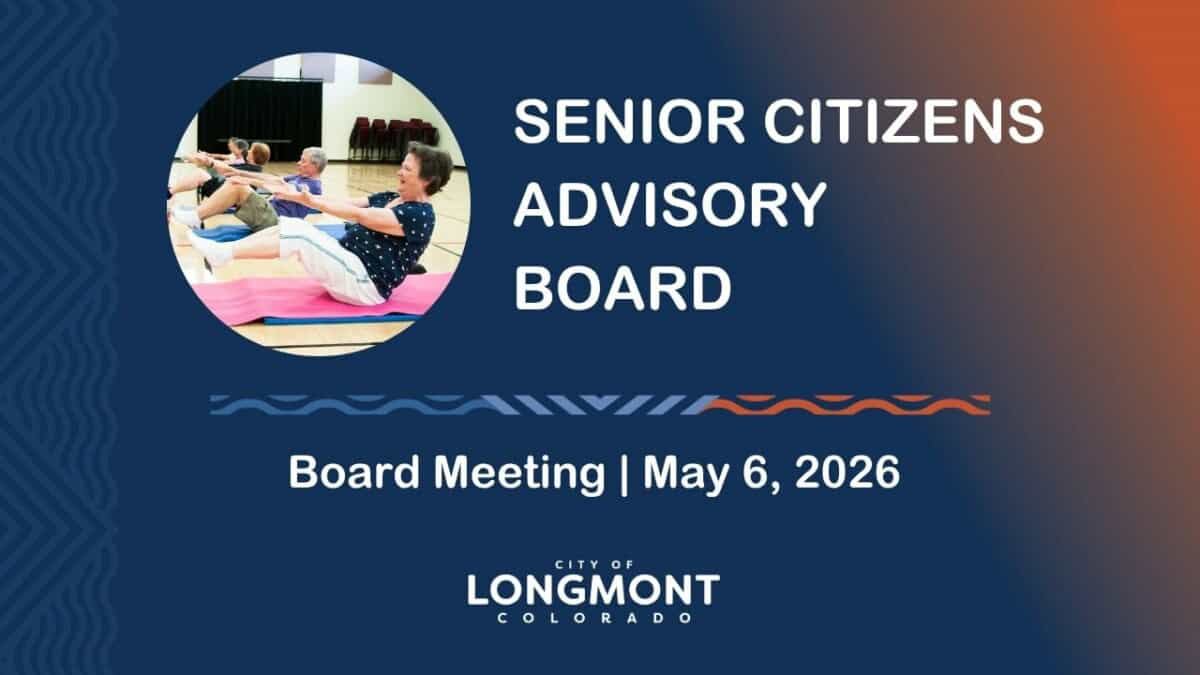
The May 6 meeting of Longmont’s Senior Citizens Advisory Board brought board members, city staff, and Senior Center leadership together to cover a packed agenda — transportation updates, a cultural exchange program, budget planning, outreach strategy, senior employment, and preparations for an annual city council presentation. Across all of it, one reality kept surfacing: Longmont has built a genuinely strong network of services for older adults, but that network is currently facing pressure from rising senior housing costs, regional budget cuts, staffing shortfalls, and growing demand.
The biggest update of the morning was a detailed report on Ride Longmont, the city’s microtransit service. Ridership is up, community reliance is growing, and the service is clearly filling an important gap for people getting to groceries, medical offices, jobs, downtown destinations, and everyday errands. At the same time, the service is straining against its current limits. More people want rides than the current budget and vehicle fleet can support.
Beyond transportation, the board also discussed the upcoming city council presentation, outreach to older adults living in Longmont Housing Authority properties, the continuing Elder Exchange with the Northern Arapaho, senior employment efforts, and the growing pressure that housing costs and limited regional aging resources are placing on older residents.
If there was one takeaway from the full discussion, it was this: Longmont has strong programs, but the need is rising faster than the system can comfortably absorb. That makes data, outreach, and advocacy more important than ever.
The Elder Exchange Is Becoming Something Lasting
One of the most compelling segments of the morning was not about policy or data. It was about people.
Senior Center staff gave an update on the Elder Exchange program with the Northern Arapaho community, and the word most often used to describe it was relationship.
The next exchange is being planned for mid-July, with Longmont hosting from July 15 through July 19. Staff are holding biweekly coordination meetings with Northern Arapaho leadership, and applications for Longmont participants will follow once the details of the reciprocal visit are finalized.
A video from the exchange was shown at Longmont’s recent city open house. The response from community members was strong — many attendees were clearly moved by what they saw and heard. Staff described the experience as one of relationship-building, cultural learning, and genuine human connection.
What came through in the update was how quickly that connection had deepened. Participants reflected on the awkwardness of early introductions and the warmth that developed through shared meals, conversation, quilting, and time together. The exchange also made space for harder reflection — on the Sand Creek Massacre, on displacement and loss, on the history that shapes the relationship between these communities.
By the time Longmont participants traveled to Wind River, what had started as a structured exchange already felt more like a reunion.
The board’s message about the program was clear: this should not be treated as a one-time symbolic gesture. It should be sustained, deepened, and held up as an example of what communities can actually do when reconciliation and relationship-building are taken seriously, not just celebrated in a press release.
The City Council Presentation Is Taking Shape
The advisory board is preparing for its annual presentation to Longmont City Council, currently scheduled for June 30 at 7 p.m.
Board leadership shared their thinking about how to frame this year’s priorities. Transportation, which dominated last year’s presentation and has driven a lot of the board’s work, will take a somewhat smaller role this time. That is not because transportation is resolved — far from it — but because some of those conversations are already moving at the staff and planning level, and the board wants to use its council time to bring other issues to the foreground.
Employment is expected to be a larger focus. So are the interconnected pressures of housing, food access, and resource navigation that are increasingly defining daily life for many older Longmont residents.
The board is also planning to support a proclamation recognizing Older Americans Month. That may seem like a ceremonial gesture, but it reflects something the board has been deliberate about: making older adults visible in city priorities. Senior services are easy to treat as a secondary concern when budgets are tight and other demands are loud. The board is pushing against that tendency by showing up in civic spaces and making the case consistently and publicly.
Ride Longmont Is Growing — and Running Into Limits
Transportation planner Kaylee Fallon joined the meeting to deliver a year-two preview of Ride Longmont, and the headline was straightforward: the service is working, and it is running out of room.
From January through March 2026, the service completed more than 21,000 rides and is now averaging about 7,000 per month, up from roughly 5,000 to 6,000 in 2025. On a typical day, 250 to 300 trips are completed. The service received 34,106 ride requests in the first quarter and was able to fill 83.3 percent of them — a strong availability rate for a six-vehicle fleet.
The rider survey numbers were equally striking. Among 150 respondents, 93 percent said they would be disappointed if they could no longer use the service, and 91 percent said access to Ride Longmont makes Longmont a more desirable place to live. Forty-four percent said they have access to a personal car but still choose to use Ride Longmont.
The main obstacle is funding. Monthly operating costs run between $110,000 and $130,000, while fare revenue covers only about $8,000 to $9,000 of that. The city has secured roughly $3.5 million in grant funding across four years through the RTD Partnership Program and a congressional appropriation, and has applied for an additional $1.8 million from a third RTD funding round. If that award comes through, the city hopes to add two vehicles to the fleet and extend Friday and Saturday service hours to 10 p.m.
Staff also noted that seniors account for about 11 percent of Ride Longmont trips despite making up roughly 19 percent of Longmont’s population — a gap that suggests there is room for more targeted outreach to older adults.
Budget Pressure Is Coming From Multiple Directions
Senior Center staff noted that the 2027 budget process is already underway and that their priorities remain largely what they have been — most importantly, additional staff capacity. That need has come up year after year, and it is still unmet.
The situation is made more difficult by a significant development at the regional level. The Boulder County Area Agency on Aging is facing a $13 million shortfall. No immediate structural overhaul is underway, but staffing reductions are already producing ripple effects. When regional aging resources get cut, more residents show up at the local level looking for help.
That dynamic puts Longmont’s Senior Center in the difficult position of absorbing increased need while the budget stays flat or grows only incrementally. The result is longer wait times for resource specialists, greater pressure on staff who are already stretched thin, and a growing gap between what residents need and what the system can reliably deliver.
Staff described their work as increasingly reactive because the pace of change in residents’ circumstances — housing situations, health needs, financial stress — is accelerating faster than programs can adapt.
Senior Housing Stress Is Not Going Away
The update from the Friends of the Longmont Senior Center put a sharp point on something that was already running underneath most of the meeting’s conversations: housing costs are becoming a serious threat to the stability of older adults in Longmont.
Whether seniors rent or own, fixed incomes are not keeping pace with rising rents, utilities, property costs, and general inflation. That affordability squeeze does not produce a single, identifiable crisis — it produces a slow accumulation of strain that eventually touches everything.
Read next: How to Apply for Colorado’s Seniors-Only Property Tax Exemption
When housing stability is threatened, seniors often need help in several areas at once: housing support, food access, transportation, employment or supplemental income, and case management to navigate the various systems that might be able to help. Those needs do not arrive one at a time, and that is what makes them so difficult to address with programs designed to handle single issues.
This is one reason the board has been deliberate about connecting its various program areas rather than treating them as separate tracks. A senior who cannot afford rent is also likely struggling with food costs, transportation, and healthcare access. The solution set has to reflect that reality.
Senior Employment Is Moving to the Center of the Conversation
The board’s discussion of senior employment was practical, grounded, and revealing in ways that were not all expected.
Board members recently attended a workforce job fair and found employers who were genuinely interested in hiring older adults. School districts, banks, and other employers expressed enthusiasm for seniors in a range of roles — custodians, bus drivers, part-time bank tellers, and other positions with benefits. That enthusiasm is encouraging, especially at a time when many older adults either want to keep working or need supplemental income to manage rising costs.
There is also a dedicated senior employment job fair planned for September 15, from 11 a.m. to 2 p.m. at the Senior Center. That event is designed specifically to connect older Longmont residents with employers who are actively looking to hire them.
But the more interesting finding from the board’s conversations was not about employer interest. It was about messaging.
Despite labor market trends showing more people working later in life — and despite clear anecdotal evidence that many Longmont seniors want or need employment — staff and volunteers said older adults are not commonly coming to the Senior Center specifically to ask for employment help. The center is not the first place they think of when they are looking for work.
That is a messaging problem as much as a service gap. If seniors do not associate the Senior Center with employment resources, they will not ask. And if they do not ask, they will not find the support that might make a real difference in their financial stability.
One practical response the board discussed was updating the Senior Services page on the city’s website to more prominently highlight employment and volunteer opportunities. It is a small change, but digital navigation matters. If the information is hard to find, it might as well not be there.
A New Survey Could Shape Future Decisions
One of the more forward-looking conversations at the meeting focused on the possibility of a new senior survey.
The most recent city survey conducted in 2023 had a meaningful impact. It helped justify program adjustments, technology support investments, bus-related changes, and schedule modifications. The experience convinced several board members that well-designed survey data can be a powerful tool when making the case for resources in a budget process.
The emerging idea is not simply to repeat that survey, but to build a new one that is more directly aligned with what the board is hearing now: questions about housing affordability, food access, transportation barriers, caregiving strain, employment interest, volunteerism, and demographic differences in needs.
That last element matters especially. Knowing that seniors broadly face challenges is useful. Knowing which seniors — by age range, disability status, income level, veteran status — are facing which specific challenges is what drives targeted action and helps allocate limited resources more effectively.
The board approved making this a standing agenda item for the next several months. That suggests they are serious about it — not treating it as an idea to file away, but as a project with timeline and intent behind it.
Reaching Seniors Who Are Not Coming Through the Door
Another thread running through the meeting was how to serve seniors who are not already engaged with the Senior Center.
The board is working on a plan to visit Longmont Housing Authority properties, starting with a presentation at The Village on Main. The goal is to meet older adults where they live and give them a clear, accessible picture of what the Senior Center offers.
That sounds straightforward, but it requires more than showing up with a flyer. It requires thinking carefully about what barriers keep people from engaging with city services in the first place.
Some of those barriers are informational — people simply do not know what is available. Others are navigational — city websites and registration systems can be difficult to use, especially for older adults who may not be comfortable with digital tools. Others are trust-related — residents who have not had positive experiences with city systems may not see an outreach visit as an invitation so much as a transaction.
Board members spoke openly about how the city’s own systems can create friction. Registration processes are not always intuitive. Program information is not always easy to find. Even a resident who is motivated to participate may struggle to figure out how to get started.
Addressing that friction honestly — rather than assuming outreach alone will solve it — is part of what makes this conversation more sophisticated than a typical promotional campaign.
What the Meeting Reflects About Longmont Right Now
Even though there are a variety of obstacles the City of Longmont has encountered as it pushes to make its senior services both more available and effective, it has taken a strategic approach to address those challenges. City staff know where the gaps in Ride Longmont’s ridership data are. The board knows which seniors are not showing up and is actively planning to go to them. Staff are tracking the ripple effects of the Boulder County Area Agency on Aging shortfall and preparing for what it means locally. The board is building a survey to generate better information because they have seen what good information can do.
None of this is the same as having the resources to solve everything. But it is the difference between managing problems as they arrive and trying to stay a step ahead.
Longmont has built a broad network of aging services through city programs and the Senior Center. The challenge the board is grappling with right now is not whether those services are worth having — that question has already been answered — but how to sustain and grow them in a city where costs are rising, regional support is uncertain, and the senior population is both growing and facing more complex pressures than it did even a few years ago.
The next few months will involve a city council presentation, a senior employment fair, a new round of outreach planning, continued Elder Exchange coordination, and the beginning of survey work that could shape services for years ahead.
FAQ
What is the Senior Citizens Advisory Board?
The Senior Citizens Advisory Board is a Longmont city advisory body that advocates for older adults, advises city council on senior-related issues, and helps connect residents to programs and services. It holds regular public meetings and presents annually to city council.
When is the board’s next city council presentation?
The board is scheduled to present to Longmont City Council on June 30 at 7 p.m.
What is the Elder Exchange?
The Elder Exchange is a relationship-building program between Longmont and the Northern Arapaho community. It includes reciprocal visits, cultural learning, shared activities, and community-building centered on elders. The next exchange is scheduled for July 15 through July 19, with Longmont hosting.
What is Ride Longmont and how much does it cost?
Ride Longmont is Longmont’s app-based and phone-bookable microtransit service. It connects residents to groceries, medical offices, downtown destinations, and workplaces. The standard fare is $2 per ride; seniors, students, and people with disabilities pay $1.
Is Ride Longmont the same as paratransit?
No. Ride Longmont includes wheelchair-accessible vehicles and serves many seniors and people with disabilities, but it is not a substitute for dedicated paratransit services. Riders with more significant mobility needs may be better served by RTD Access-a-Ride or similar options.
What is the Boulder County Area Agency on Aging shortfall, and does it affect Longmont?
The Boulder County Area Agency on Aging is facing a $13 million budget shortfall. Staffing reductions there are already producing ripple effects locally — when regional services are reduced, more residents turn to Longmont’s Senior Center for help.
Is there a senior employment event coming up?
Yes. A dedicated senior employment job fair is planned for September 15 from 11 a.m. to 2 p.m. at the Senior Center. The event is designed to connect older Longmont residents with employers actively seeking to hire them.
How can I learn more about Senior Center programs and services?
Information is available through the Senior Services section of the City of Longmont’s website. The board discussed improving that page to make programs, employment resources, and registration information easier to find.
The Senior Citizens Advisory Board’s annual presentation to Longmont City Council is scheduled for June 30 at 7 p.m. The senior employment job fair is planned for September 15 from 11 a.m. to 2 p.m. at the Senior Center. The Elder Exchange with the Northern Arapaho is scheduled for July 15 through July 19, with Longmont hosting.