
What is the Leadville 100? Inside Colorado’s Toughest Race
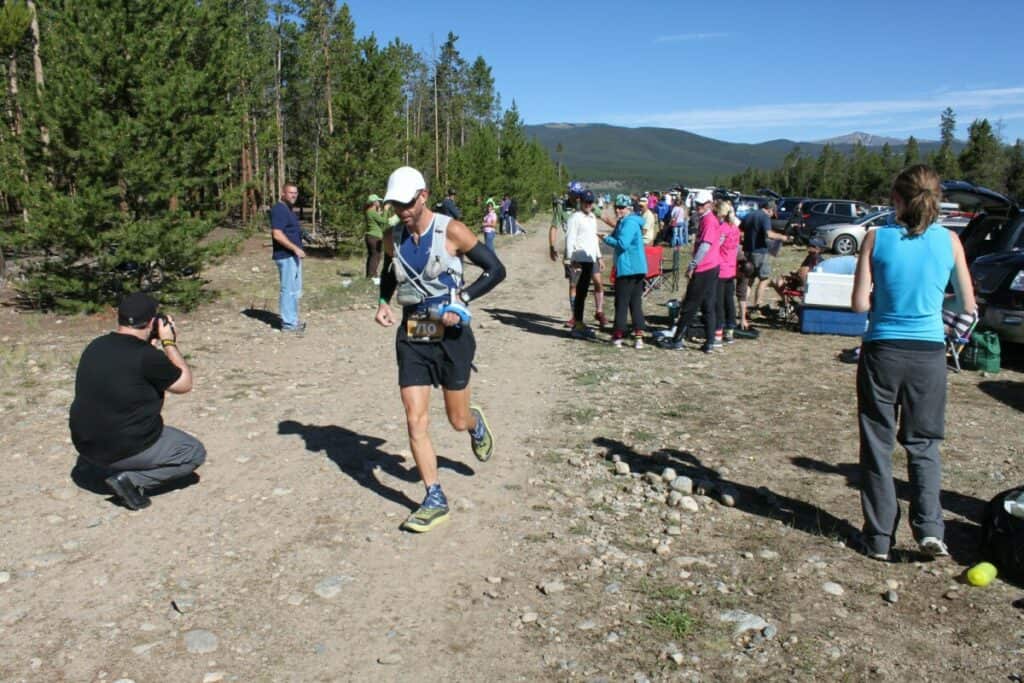
Colorado is a major destination for trail running, and is home to plenty of famous races. One clearly stands out as the toughest – the Leadville 100 trail run. Officially called the Leadville Trail 100 Run, it is one of the most grueling ultramarathons in the world. (Cover Photo by Karah Levely-Rinaldi on Flickr)
Held each August in Leadville, Colorado, it spans 100 miles of mountainous terrain and extreme elevation, testing runners both physically and mentally. Many years, fewer than 50% of participants finish the race.
Here are a few quick stats about the race:
- Start elevation: 10,200 ft
- Highest point: 12,600 ft (Hope Pass)
- Total distance: 100 miles
- Time limit: 30 hours
- Race date: Third Saturday of August (2026: August 15)
The race’s incredible combination of altitude, distance, and technical trails attracts elite athletes and a handful of amateurs every year.
The “Race Across the Sky”
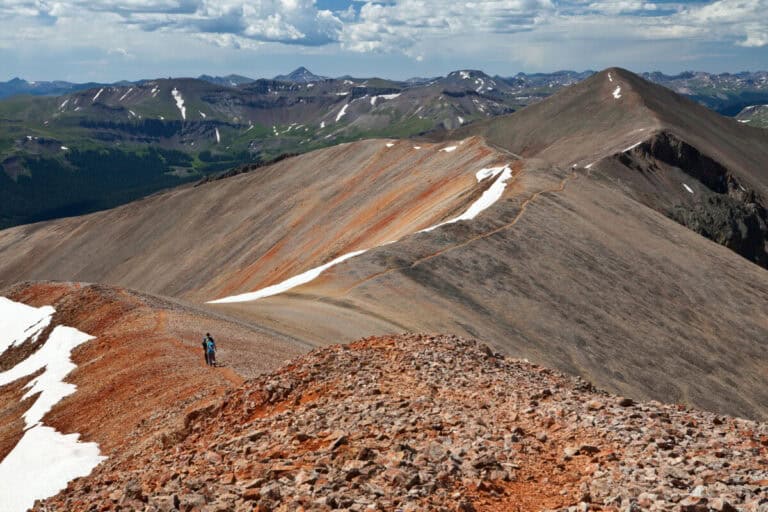
Nearly the entire course of the Leadville 100 stays above 10,000 feet, with runners ascending alpine passes and ridgelines that feel sky-high, giving it one of the coolest race nicknames ever: the Race Across the Sky.
With multiple climbs over 11,000 feet and the iconic double ascent of Hope Pass, that moniker isn’t an exaggeration – the race quite literally unfolds in the sky. That’s part of what makes the Leadville 100 such a huge challenge.
Globally, very few endurance events operate at this altitude for such a long duration. Even seasoned ultrarunners struggle with reduced oxygen, faster fatigue, and slower recovery. Call it equivalent to hiking even one of Colorado’s easiest 14ers ten times back to back — an incredible feat.
What is the elevation gain of the Leadville 100?
The Leadville Trail 100 Run features a total elevation gain of 15,744 feet across its 100-mile out-and-back course.
Runners begin at 10,200 feet in Leadville and climb as high as 12,532 feet at Hope Pass, which they must summit twice. The course includes other major climbs as well, such as Powerline and Sugarloaf Pass. The low point is about 9,200 feet.
When did the Leadville 100 first start?
The Leadville Trail 100 Run was first held in 1983, the brainchild of local miner Ken Chlouber. After the Climax Mine shut down, Leadville was struggling economically. Chlouber believed a 100-mile footrace through the mountains could bring visitors to the town and help it become a tourist destination.
That first year, 45 runners showed up. Trails weren’t as well maintained as they’ve become since, and race support was also much less developed. However, the Leadville 100 caught hold and quickly earned a reputation as one of the toughest ultramarathons in the world.
Leadville 100 Course Records
Ann Trason set the women’s course record over 30 years ago in 1994 with a time of 18:06:24. That record still stands today and is one of the most respected performances in the race’s history.
The men’s course record was set more recently in 2024 by David Roche, who finished in 15:26:34. His time broke a long-standing record and set a new benchmark for the event.
Bill Finkbeiner holds the record for the most consecutive finishes of the race, having completed the Leadville 100 30 years in a row, starting in 1984.
Leadville Trail 100 Course Breakdown
The race follows an out-and-back course, starting and finishing in the town of Leadville. Much of the route runs along the Colorado Trail, beginning at 10,200 feet and reaching a turnaround near Winfield.
Major climbs include:
- Hope Pass (12,532 ft)
- Powerline
- Sugarloaf Pass
The trail is technical and uneven, with loose rock and steep grades. Weather can also shift quickly, with cold mornings, sun exposure, and sudden storms.
Aid Stations and Crew Access Points
The course has aid stations roughly every 10–13 miles, several of which allow crew access — meaning your support team can meet you there with fresh gear and nutrition. Key stations on the outbound leg include May Queen (mile 13.5), Fish Hatchery (mile 23.5), Half Pipe (mile 30.5), Twin Lakes (mile 39.5), and Winfield (mile 50), which serves as the race’s turnaround point. The return leg mirrors the outbound route, with Twin Lakes and Fish Hatchery again serving as the primary crew-accessible stops.
Twin Lakes — visited at both mile 39.5 and mile 60.5 — is considered the most critical crew point in the race. It’s the last major stop before and after the double crossing of Hope Pass, and many runners’ races are won or lost here.
How to Enter the Leadville 100
The Leadville 100 Run takes place each year on the third Saturday of August. The 2026 race is scheduled for August 15, 2026.
Registration timeline:
- December 1 — Lottery opens (10 a.m. MST)
- December 15 — Lottery closes (11:59 p.m. MST)
- January — Lottery results announced
- Spring — Qualifier race season opens
- Summer — Final transfer and waitlist windows
Most runners enter through the lottery, which opens every December 1st at 10 a.m. MST and closes on December 15th at 11:59 p.m. MST (register on the official Leadville Race Series website.) If you miss the December window, the next best path is qualifying at a designated Leadville Race Series event or securing a charity bib. Guaranteed entry options — coaching packages, Life Time Fitness member benefits, and run camp spots — are available at a higher cost and often sell out before lottery results are announced.
Race Week & Expo
Race week in Leadville is a full community experience building up to race day. The Race Across the Sky Expo takes over downtown with:
- Local vendors and gear booths
- Live podcasts and media coverage
- Athlete check-ins and swag pickup
It’s open to the public and creates a welcoming, festival-like atmosphere worth arriving a few days early for.
Where to Stay for the Leadville 100
Leadville is a town of roughly 2,600 people — and race weekend fills every available bed for miles in every direction. Book accommodation as soon as your entry is confirmed. Waiting until spring almost guarantees you’ll be commuting from a neighboring town.
Options range from hotels and vacation rentals in Leadville itself to lodging in nearby Buena Vista (~25 miles south), Frisco (~30 miles north), and Breckenridge. For runners and crew looking for a flexible, cost-effective setup, camping near the course is a popular choice — both developed campgrounds and dispersed National Forest sites are available in the area.
Read next: Try These Longmont Campgrounds, RV Parks & Tent Camping Spots — Longmont also works as a staging base, sitting about 90 minutes east of Leadville on US-285.
Driving to Leadville from Longmont and the Colorado Front Range
For runners and fans driving from the Front Range, Leadville is one of Colorado’s most accessible mountain race destinations — about 90 minutes from Longmont via US-36 West through Boulder and US-285 South through South Park. The drive itself is a preview of what’s ahead: by the time you reach Leadville, you’re already well above 10,000 feet and the altitude has started working on you.
Most Front Range athletes heading up for race weekend leave Friday afternoon to arrive before pre-race check-in and the expo downtown. If you’re crewing, identify your crew access points before race morning — Twin Lakes and Fish Hatchery are both reachable by car, and having a plan saves significant stress on race day.
Leadville 100 Pacers, Crew Access, and Aid Stations
Runners are backed by a strong support network on race day. Volunteers staff aid stations, offering food, hydration, and encouragement. Many athletes use pacers to help them stay on pace late in the race. Crew teams manage drop bags, gear changes, and give mental boosts throughout the course.
Pacers are permitted starting at the Twin Lakes aid station inbound — mile 60.5 on the return leg — and may accompany runners for the final 39.5 miles to the finish. Pacers must be pre-registered with the race and may not receive aid from course aid stations.

What is the Leadville Trail 100 MTB?
The Leadville Trail 100 MTB is the mountain bike version of the iconic race, held on a similar high-altitude course. Launched in 1994, the event has grown into one of the most prestigious mountain bike races in the world. Riders tackle 104 miles of rugged terrain with over 11,000 feet of climbing, all at elevations ranging from 9,200 to 12,600 feet.
The course follows much of the same out-and-back route as the run, including climbs over Powerline, Sugarloaf, and Columbine Mine. The race is known for its steep climbs, fast descents, and the thin mountain air that pushes riders to their limits.
Entry is competitive, with riders gaining access through a lottery, qualifier events, or charity entries. Past competitors include big names like Lance Armstrong, Levi Leipheimer, and Dave Wiens.
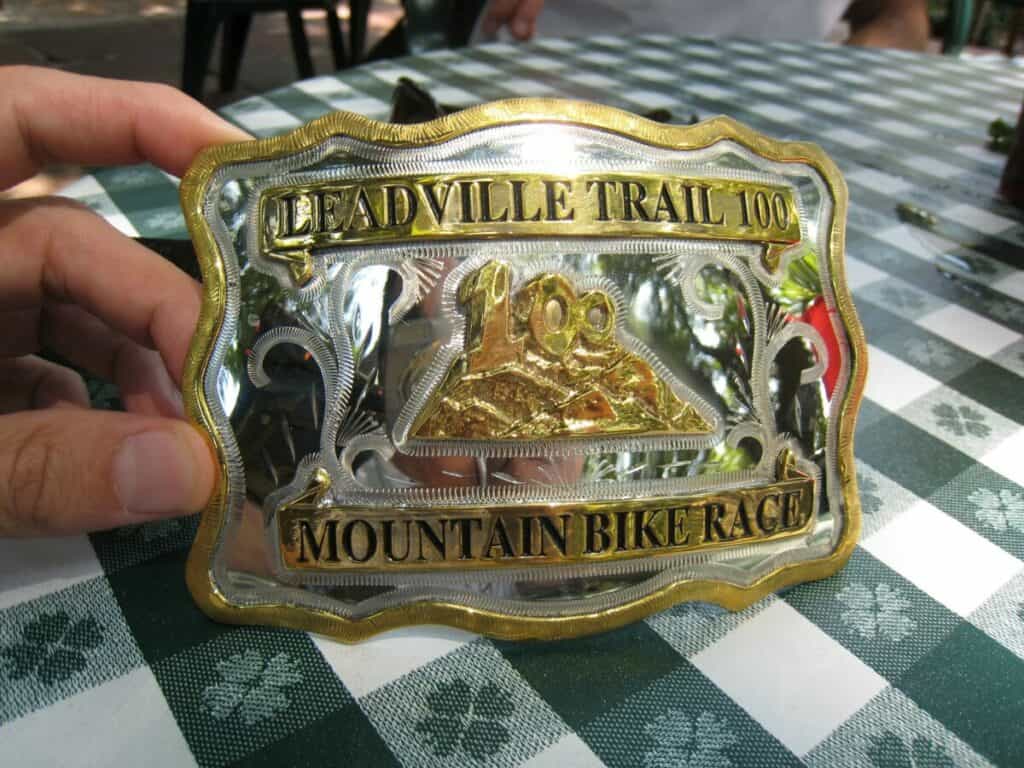
Finishing times range from under 6 hours for pros to 12 hours for cutoff finishers. A sub-9-hour ride earns the coveted big belt buckle, while all official finishers receive a small buckle.
Leadville 100 MTB Belt Buckle: Sub-9 vs. Sub-12
The belt buckle system is central to the Leadville 100 MTB experience. Every rider who finishes within the 12-hour cutoff earns a belt buckle — a trophy that has become a badge of honor in the endurance cycling community. The most coveted award is the big belt buckle, reserved for riders who break 9 hours. For context, the course covers roughly 104 miles at elevations between 9,200 and 12,600 feet, which means a sub-9 finish requires elite fitness and near-perfect execution.
There is also an unofficial “La Plata Grande” recognition for riders who accumulate 1,000 total Leadville MTB miles across multiple finishes — roughly 10 completions.
Leadville 100 MTB vs. Leadville 100 Run
The run and the MTB race share a town, a name, and much of the same course — but they are distinct events with different cultures and timelines. The run takes place in mid-August on foot over 100 miles, with a 30-hour cutoff. The MTB race covers 104 miles by mountain bike, with a 13-hour overall cutoff and a 12-hour buckle cutoff. Both use a lottery entry system, both feature Hope Pass and the Columbine area as the defining challenge, and both award belt buckles to finishers.
The run draws a smaller field of serious ultrarunners; the MTB attracts a broader pool that includes many recreational cyclists for whom Leadville is a bucket-list event. If you’re deciding between the two, the run demands more raw endurance and technical mountain running experience; the bike race is more accessible to athletes coming from a road cycling or triathlon background.
FAQ About the Leadville Trail 100 Run
How hard is the Leadville 100?
The Leadville Trail 100 is one of the most difficult ultramarathons in the world. Runners face high altitude, technical terrain, and massive elevation gain. In most years, less than half of the starters finish the race.
How do you train for it?
Training for the Leadville 100 requires months of sustained base-building that combines long-distance trail running, altitude work, and back-to-back long run weekends to simulate race fatigue. Strength and mobility training helps protect joints over 100 miles of technical, uneven terrain.
Mental preparation — learning to manage long hours of discomfort and unpredictable mountain weather — is considered by most finishers to be just as important as the physical training.
What percentage of people finish the Leadville 100?
In most years, fewer than 50% of starters complete the Leadville 100. In some years, the finish rate drops below 40%, making it one of the most selective ultramarathons in the world. The high dropout rate reflects the combined demands of altitude, distance, and unpredictable mountain weather — not just overall fitness.
When does the Leadville 100 lottery open?
The Leadville 100 lottery opens every year on December 1st at 10 a.m. MST and closes on December 15th at 11:59 p.m. MST. Runners register through the official Leadville Race Series website. Lottery results are announced in January.
How long does it take most people to finish the Leadville 100?
Most recreational finishers complete the Leadville 100 Run in 25–29 hours. The men’s course record is 15:26:34 (David Roche, 2024) and the women’s record is 18:06:24 (Ann Trason, 1994). The 30-hour time limit is the outer boundary — finishing at any point within it earns a belt buckle.
Can you use a pacer at the Leadville 100?
Yes — pacers are allowed starting at Twin Lakes inbound (mile 60.5 on the return leg). They may accompany runners for the final 39.5 miles to the finish. Pacers must be registered with the race in advance and cannot receive aid from official course aid stations.
How do you watch the Leadville 100?
The best spectator locations are the Twin Lakes aid station and the finish line on Harrison Avenue in downtown Leadville. Twin Lakes is accessible by car and lets spectators see runners twice — once heading out and once returning. The downtown finish line stays active through the early morning hours as runners come in before the 30-hour cutoff.
Is the Leadville 100 an out-and-back course?
Yes — the Leadville 100 follows an out-and-back route, starting and finishing in downtown Leadville. Runners travel roughly 50 miles to the turnaround point near Winfield, then retrace the same course back. This means every climb on the outbound leg must be descended and re-climbed on the return — including two crossings of Hope Pass.
How long do runners have to finish?
There is a 30-hour time limit to complete the race. Runners must also meet cutoff times at several aid stations to continue.
What’s the prize?
Finishers who complete the race within 30 hours earn a silver belt buckle — one of the most recognized awards in ultramarathon running. Runners who finish in under 25 hours earn the coveted big belt buckle. All finishers also receive a finisher’s medal and race swag.
Can anyone enter?
Yes – there are no strict qualifying standards. Entry is available via lottery, charity slots, or coaching packages that include guaranteed registration.
What makes Hope Pass so iconic?
Hope Pass is the highest point on the course at 12,532 feet. Runners must climb it twice, once each direction, making it the defining challenge of the race.