

Longmont’s Municipal Fiber Optic Internet Keeps Beating Big ISPs — and It’s Not an Accident
As communities across the country grapple with rising internet costs, inconsistent service, and limited competition, municipal broadband has become a central policy issue.
In Longmont, Colorado, that debate is no longer theoretical. The city’s community-owned fiber network, NextLight, has become a nationally recognized example of how municipal internet can compete with — and often outperform — major private providers.
NextLight’s latest national recognition underscores how Longmont fits into the broader conversation about internet access as essential infrastructure rather than a luxury service.
As demand grows for fast, reliable connectivity, Colorado has rapidly emerged as a thriving hub for technology innovation. NextLight’s continued success reflects more than a single standout year; it signals a proven, long-term commitment to performance, value, and customer satisfaction that continues to set Longmont apart nationwide.


Longmont’s National Moment, Again
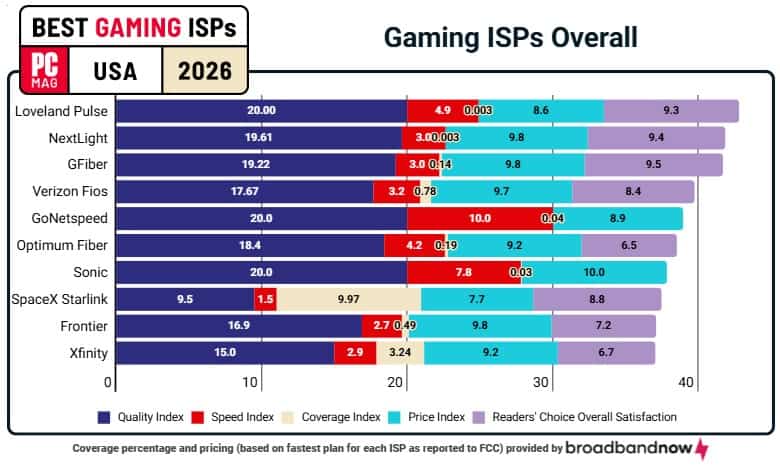
In 2026, PC Magazine recognized Longmont Colorado municipal internet NextLight as the 2nd best gaming internet provider in the country, just behind its neighbor, Loveland, Colorado’s Pulse internet, reinforcing Longmont’s reputation as a fiber broadband leader. The recognition places Longmont’s municipal network on the same stage as — and frequently ahead of — far larger national ISPs.
“Going into 2026, a couple of well-loved smaller ISPs with excellent gaming quality ratings are at the top,” PC Mag wrote. Pulse and NextLight finished one-two with nearly identical scores, separated by just nine-tenths of a point.
NextLight also earned excellent satisfaction ratings in their Readers’ Choice survey.
This latest honor reflects more than a strong single-year performance. It highlights a sustained, long-term commitment to speed, reliability, value, and customer satisfaction, qualities that have become central to debates over whether local governments can successfully operate broadband networks.
As demand for fast, reliable connectivity grows, Colorado has emerged as a regional technology hub, and Longmont’s network plays a direct role in that evolution.
About PC Magazine’s ISP Rankings
PC Magazine’s internet rankings are widely cited because they blend independent technical testing with real-world customer experience. Providers are evaluated using a mix of:
- Latency and jitter, which directly affect real-time applications
- Large-scale speed test data
- Transparent pricing comparisons
- Verified customer satisfaction from Readers’ Choice surveys
This methodology ensures that rankings reflect not just peak speeds, but how networks perform under everyday conditions. For municipal broadband advocates, these rankings provide third-party validation that city-owned networks can deliver consistent, high-quality service.
Best Gaming ISP for 2026: A Demanding Benchmark
In PC Magazine’s Best Gaming ISPs for 2026, NextLight earned a top national ranking. Gaming is one of the most demanding use cases for any internet service, requiring ultra-low latency, minimal jitter, and stable performance during peak usage.
NextLight’s performance in this category demonstrates that Longmont’s fiber network excels where technical quality matters most. Notably, both top-ranked providers were municipal networks, outperforming many national ISPs and reinforcing the argument that community-owned infrastructure can lead in performance and reliability.
NextLight’s Track Record of Awards
NextLight’s 2026 award builds on a long history of national recognition. Past honors include:
- Best Gaming ISP (overall and regional) for 2026
- Best Municipal ISP in PC Magazine Readers’ Choice awards in 2023 and 2025
- Consistently high national rankings for value, reliability, and customer satisfaction
- Ongoing recognition as one of the top local ISPs in the United States
For critics of municipal broadband, one common concern is sustainability. Longmont’s repeated recognition across multiple years suggests that performance is not a one-time success, but the result of durable infrastructure and steady management.
The Broader Issue: Internet as Public Infrastructure
The core issue behind municipal broadband debates is whether internet access should be treated like a public utility. Longmont made that decision early, building NextLight through its municipal electric utility after residents expressed frustration with slow speeds, high prices, and limited choice.
By prioritizing fiber-to-the-premises infrastructure, the city invested in long-term capacity rather than short-term cost savings. This approach aligns with growing national consensus that broadband is foundational to economic participation, education, healthcare, and civic life.
Price Stability and Local Accountability
One of the most visible differences between NextLight and national providers is pricing structure. NextLight offers transparent, flat-rate pricing with no data caps or promotional gimmicks. For residents and businesses, that stability reduces uncertainty and long-term costs.
Because the network is community-owned, decisions about upgrades, pricing, and customer service are made locally. Supporters argue this accountability allows the city to respond faster to community needs than large, shareholder-driven corporations.
Economic and Community Benefits
Reliable, high-speed fiber has positioned Longmont as an attractive location for remote workers, small businesses, and tech-adjacent industries. Low latency and consistent speeds benefit:
- Remote employees who rely on stable video conferencing
- Gamers and streamers who need low-lag performance
- Small businesses competing in online and digital markets
These advantages extend beyond individual households, supporting broader economic development and reinforcing Longmont’s reputation as a forward-looking city among the nation’s leading tech hubs.
The Tradeoffs of Municipal Broadband
While Longmont’s experience is largely positive, it also illustrates real tradeoffs. Building a citywide fiber network required significant upfront investment, financed through bonds and utility revenues. Strong adoption made the project sustainable, but financial risk was inherent.
Operating an ISP also demands ongoing technical expertise, cybersecurity planning, and regular infrastructure upgrades. Longmont benefited from an established municipal utility with operational experience — a capacity not all cities possess.
Legal and political barriers also remain a factor. Longmont had to navigate state-level restrictions on municipal broadband, requiring voter approval to opt out before expanding service.
Municipal Broadband as a Competitive Advantage
NextLight’s success highlights a broader structural argument for municipal internet. Community-owned networks can prioritize:
- Faster infrastructure upgrades
- Long-term investment over short-term returns
- Customer-first decision making
- Strong local accountability
PC Magazine has repeatedly noted that municipal ISPs rank highly in reliability and customer satisfaction, areas where locally governed providers can often move faster and respond more directly than national companies.
FAQs
What makes NextLight different from other providers?
It is a community-owned fiber network focused on reliability, value, and local service rather than shareholder returns.
Why does PC Magazine rank municipal ISPs so highly?
Because they often deliver strong performance, transparent pricing, and high customer satisfaction backed by real-world data.
Is NextLight only good for gaming?
No. Low latency and fast speeds benefit everyday use, remote work, education, and streaming.
How does Longmont internet compare nationally?
It consistently outperforms many larger national ISPs in speed, reliability, and customer satisfaction.
Has NextLight won awards before 2026?
Yes. It has earned multiple national honors over several years.
Is NextLight available citywide?
Yes. It serves most residents throughout Longmont.
A National Win with Local Impact
NextLight’s latest recognition from PC Magazine affirms what many Longmont residents already experience daily: sustained investment in community-owned broadband can deliver national-caliber results. Rather than short-term hype, the network’s success reflects years of planning, infrastructure investment, and local accountability.
As debates over municipal internet continue nationwide, Longmont stands as an example of how treating broadband as public infrastructure can translate into real-world performance, value, and long-term community benefit.