

Colorado School Vaccine Requirements: What’s Changing for 2026-2027?
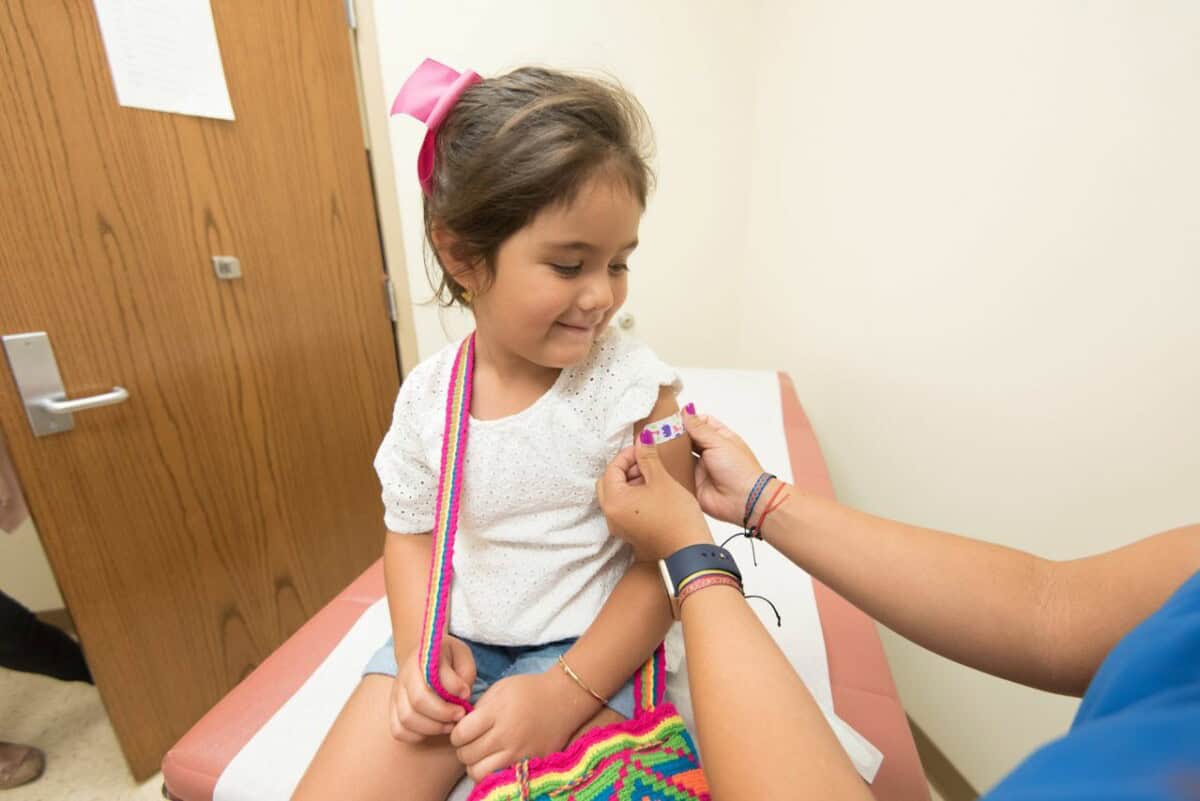
Colorado school immunization requirements are getting an update: starting with the 2026-2027 school year, Colorado is shifting its Tdap requirement from 6th-grade entry to 7th-grade entry. This means students entering seventh grade for the first time this fall need one documented dose of the Tdap vaccine on file before their first day. This update comes directly from the Colorado Department of Public Health and Environment (CDPHE), and it marks the first school year the new rule is actually in effect – not a future change still being phased in.
Who’s grandfathered in?
If your child already received Tdap at 6th-grade entry during the 2025-2026 school year, good news: no second dose is needed. Beyond that, a rising 7th grader is already compliant with one of three things on file:
- An immunization record showing the adolescent Tdap dose
- A signed in-process catch-up plan
- A completed Tdap exemption certificate
What are Colorado’s full school immunization requirements?
The six required vaccines for K-12
Colorado school immunization requirements cover six core vaccines for students in kindergarten through 12th grade:
- Hepatitis B (HepB)
- Diphtheria, tetanus, pertussis (DTaP)
- Inactivated poliovirus (IPV)
- Measles, mumps, rubella (MMR)
- Varicella (chickenpox)
- Tetanus, diphtheria, pertussis (Tdap)
Final doses of DTaP, IPV, MMR, and varicella are specifically required before kindergarten entry, while the Tdap dose applies at the 7th-grade milestone.The HepB vaccine is typically completed by 9 months of age.
How many doses is each vaccine?
Here’s the full dose breakdown, straight from CDPHE:
- HepB — 3 doses
- DTaP — 5 doses
- IPV — 4 doses
- MMR — 2 doses
- Varicella — 2 doses
- Tdap — 1 dose (at 7th-grade entry)
For each student, schools must have one of the following on file:
- An up-to-date immunization record
- A signed in-process catch-up plan
- A completed exemption certificate
Without one of these three, Colorado law requires schools to deny attendance until documentation is provided.
Does Colorado have an exemption process?
Medical vs. nonmedical exemptions
If you’re pursuing a school vaccine exemption in Colorado, it needs to go through the state’s official process — an informal note from a parent or provider won’t satisfy the requirement. Families must obtain a Certificate of Medical or Nonmedical Exemption using Colorado’s official forms. Nonmedical exemptions aren’t a one-time filing, either: they must be renewed annually and submitted to each school your child attends.
What happens during an outbreak
Here’s an important nuance: even a valid exemption doesn’t guarantee attendance during an active disease outbreak. CDPHE notes that if a student is exposed to measles, for example, an exempted or under-vaccinated child could face a minimum 21-day exclusion from school to protect the wider community.
Where Can You Find Back-to-School Vaccines?
Counties across the state are stepping up to help families meet the new requirement. Boulder County Public Health has hosted back-to-school vaccine clinics where walk-ins are welcome alongside scheduled appointments. Parents are asked to bring their insurance card and their child’s immunization record, and programs are available for families without insurance — a model other Colorado counties are echoing as the school year approaches.
Why public health officials say it matters beyond one child
According to local public health experts, routine vaccination offers two layers of protection: it shields the individual child from serious illness, and it protects the broader school community, including people who can’t be vaccinated themselves. Separately, CDPHE also tracks other seasonal efforts, like flu vaccination rates in Colorado children, though flu vaccination itself isn’t a school-entry requirement.
Where to find current CDPHE requirements and school-specific data
Per Immunize Colorado, Colorado schools and child care are required to report their immunization and exemption rates to the state every year. That means parents can look up a specific school’s vaccination data — useful information for families navigating SVVSD and BVSD open enrollment windows, or anyone who just wants a clearer picture of their school community’s protection level.
A reminder to verify before the first day
Since CDPHE requirements and dose tables are reviewed annually and can shift, it’s worth confirming current-year specifics directly with CDPHE or your school shortly before the first day, rather than relying on last year’s information.
FAQs
When does the new Colorado Tdap requirement take effect?
The new Colorado Tdap requirement takes effect starting in the 2026-2027 school year for students entering the 7th grade.
Do older students need a new dose?
No, older students do not need a new dose, as this change only affects incoming 7th graders.
What are the six required vaccines?
The six required vaccines for K-12 students in Colorado are Hepatitis B (HepB), DTaP, Inactivated Poliovirus (IPV), MMR, varicella, and Tdap.
Does child care have different vaccine requirements from K-12?
Child care facilities require the Hib and PCV vaccines, which are not required for K-12 schools.
What documents do I need to show the school?
Before the first day of school, parents must provide an immunization record, a signed in-process catch-up plan, or a valid exemption certificate.
How does exemption work?
Nonmedical exemptions are processed using official state forms and must be renewed on an annual basis.
Can exempted students be excluded during outbreaks?
Yes, exempted students may be excluded from attending school for up to 21 days during an outbreak or exposure to diseases like measles.
Where can I find my child’s vaccination records?
You can find your child’s immunization records through their health care provider or the state’s immunization registry system.
Where can I check school exemption rates?
You can check school exemption rates by reviewing the annual school reporting data published by the Colorado Department of Public Health and Environment (CDPHE).