
Is There Any Truth Behind the Denver Airport Conspiracy Theory?
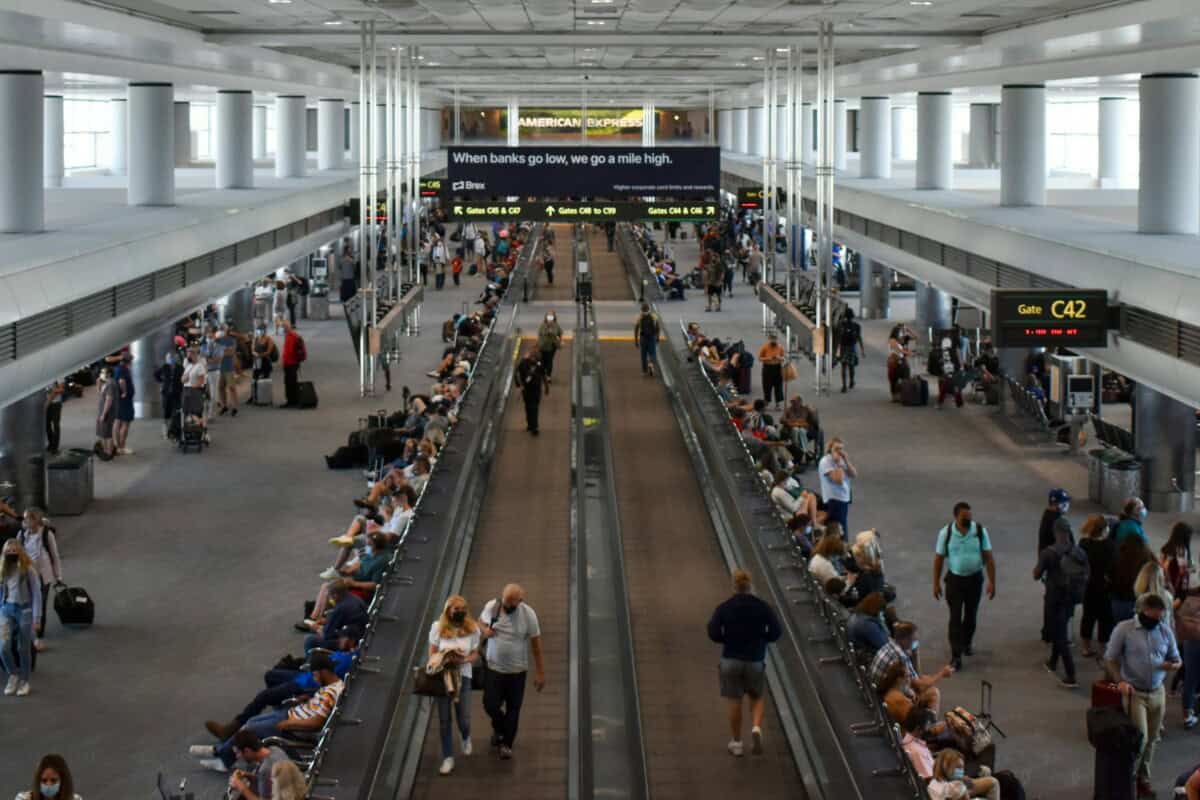
Since opening in 1995, Denver International Airport (DIA) has become a hotspot for many stories and legends tied to the Denver airport conspiracy. Known for its vast scale and distinctive design, the airport quickly gained fame not just for its size, but for its eerie and imaginative public art and rumors of tunnels beneath.
From the glowing red eyes of Blucifer, the massive blue horse sculpture guarding the entrance, to the striking Denver airport murals that some claim hold hidden meanings, DIA is more than meets the eye. While officials playfully embrace the rumors, experts note that such stories persist because people seek comfort in mystery, finding meaning where the truth is simply more ordinary.
Where does the DIA Conspiracy Theory Come From?
Why Build a New Airport at All?
When plans for Denver International Airport began in the late 1980s, many locals questioned the need for it. Stapleton Airport was still fully operational, so the project’s high costs, construction delays, and shifting plans raised eyebrows. This uncertainty gave rise to early whispers that something secretive was happening beneath the surface.
Runway Design and the “Swastika” Claim
Another popular theory focuses on the runways, which some claim resemble a Nazi swastika when viewed from above. In reality, the pinwheel layout was designed for efficiency and safety, allowing multiple runways to operate at once and reducing closures caused by Colorado’s unpredictable wind patterns. The shape may appear symbolic to some, but it’s simply smart engineering at work.
Secret Societies and Symbolism
The “New World Airport Commission”
One of the most persistent Denver airport conspiracy stories focuses on a Masonic dedication stone near the main terminal. It mentions the New World Airport Commission, which some interpret as a secret nod to the “New World Order,” a rumored global elite. The Masonic symbol on the marker only deepened suspicion.
In reality, the group was founded by Charles Ansbacher, a Colorado Symphony conductor, and named in honor of Dvořák’s New World Symphony to celebrate the airport’s grand opening.
The Freemasons and Illuminati Connection
The stone also displays the traditional Masonic symbol, leading some to connect the airport to the Illuminati. In reality, these engravings mark a time capsule containing Denver memorabilia, not secret codes or messages. The symbolism is civic pride, not conspiracy.
The Underground Tunnel Theories
Few parts of the Denver airport conspiracy capture imaginations like the supposed tunnels beneath Denver International Airport. Rumors swirl about secret bunkers, alien lairs, and even lizard people living underground.
While it’s true that DIA has an extensive tunnel system, its purpose is far less dramatic, these areas house baggage transport systems, maintenance routes, and employee access corridors. Some theorists claim the tunnels connect to the North American Aerospace Defense Command (NORAD), nearly 90 miles away, but such a structure would be physically impossible. Rather than deny the rumors, the airport leans into the fun, displaying tongue-in-cheek signs about “drilling to the underworld.”
The Art That Fueled the Conspiracies
Blucifer and the Curse of the Blue Mustang
Standing 32 feet tall, Blucifer, the fiery-eyed blue horse guarding Denver International Airport, is both awe-inspiring and unsettling. Created by artist Luis Jiménez, the sculpture gained infamy after a tragic accident in which a section of the horse fatally injured its creator.
Many link its glowing red eyes to apocalyptic imagery, but they were actually inspired by Jiménez’s father’s neon sign shop, as a nod to his heritage. Despite eerie associations, Blucifer remains a striking example of bold public art, not a bad omen.
The Denver Airport Murals
The colorful murals by Leo Tanguma, Children of the World Dream of Peace and In Peace and Harmony with Nature, are often misread as signs of global catastrophe. In truth, they represent humanity’s triumph over war and environmental destruction. Currently, these Denver airport murals are in storage for terminal renovations.
The Gargoyles and Other “Guardians”
Terry Allen’s Notre Denver gargoyles, perched in open suitcases, symbolize protection over travelers’ luggage, embodying humor and watchfulness, not evil.
Why People Believe & The Psychology of Conspiracy
Belief in conspiracy theories often arises from a desire for control and meaning in uncertain situations. The mysteries surrounding Denver International Airport, its size, strange art, and quirky design, offer the perfect canvas for speculation. People are naturally drawn to fill in the gaps when information feels incomplete or confusing.
Interestingly, the airport’s own tongue-in-cheek marketing, like posters joking about “lizard people” or “Illuminati headquarters”, keeps these myths alive. By embracing the humor rather than denying it, DIA turns curiosity into entertainment, ensuring the Denver airport conspiracy remains a lasting cultural phenomenon.
The Real Magic of DIA
Beyond the rumors and myths, Denver International Airport shines for all the right reasons. It’s one of the largest airports in the world, featuring a stunning white tent roof that mirrors the peaks of the Rocky Mountains. More than a travel hub, it’s a gateway to Colorado adventure, from the legendary Leadville 100 race to the breathtaking Colorado tarantula migration each fall. In the end, the real magic of DIA lies in its innovation and artistry, proof that truth can be just as captivating as conspiracy.
FAQs
What is the Denver airport conspiracy theory?
The Denver airport conspiracy is a collection of rumors claiming that Denver International Airport hides secret societies, underground bunkers, or hidden meanings within its art and design.
Is there evidence of underground bunkers or aliens?
No credible evidence exists. The tunnels beneath the airport are used for baggage transport, utilities, and maintenance, nothing more.
Why does the airport use Illuminati imagery in ads?
DIA embraces humor, using tongue-in-cheek marketing to entertain travelers and acknowledge the wild stories surrounding it.
Who made Blucifer, and why does it have red eyes?
Artist Luis Jiménez created Blucifer and gave it glowing red eyes to honor his father’s neon sign work, not for any dark symbolism.
What’s the meaning behind the Denver airport murals?
Artist Leo Tanguma’s murals symbolize peace, unity, and environmental harmony, messages of hope rather than apocalypse.