
Water Advisory Board – April 2026: Longmont Moves Toward a Mild Drought Response

April’s Water Advisory Board meeting made one thing very clear: it is dry, everybody knows it, and Longmont is preparing accordingly.
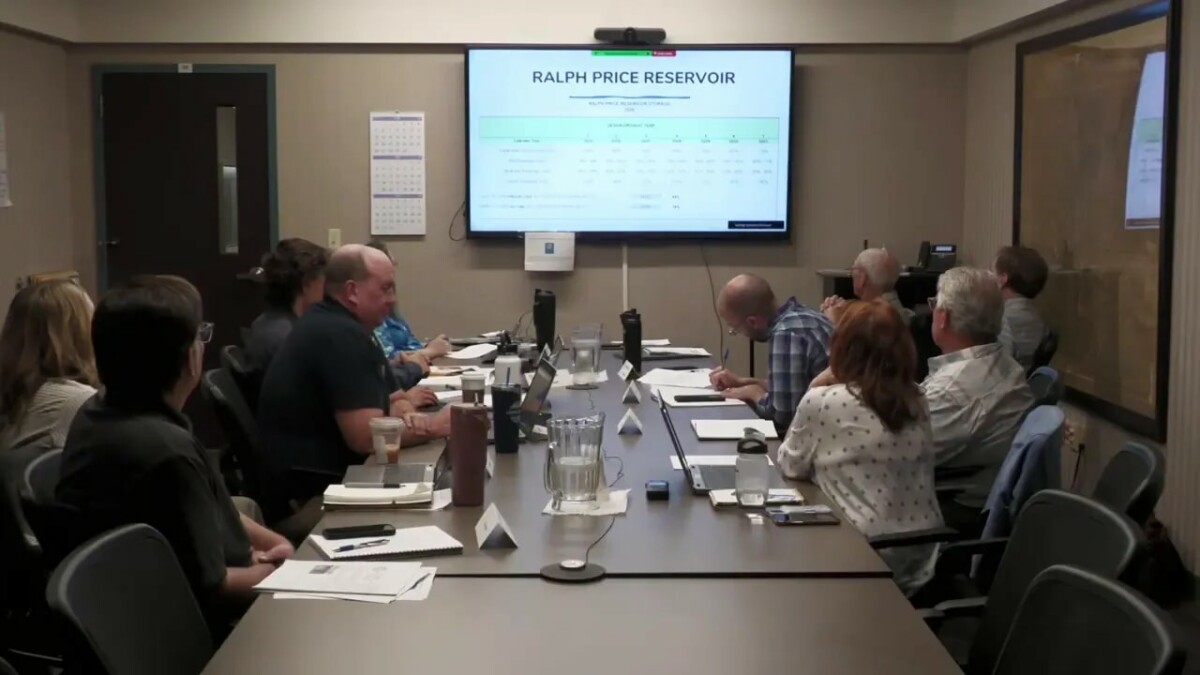
The meeting covered current stream conditions, reservoir storage, snowpack, annexation items, drought planning, irrigation messaging, water efficiency best practices, and a few legislative and board-administration updates. The biggest takeaway was the board’s recommendation to move Longmont into a mild drought response level, with City Council expected to consider that recommendation in May.
Table of Contents
- Current water conditions: dry year, low flows, and not much room for optimism
- What “wait until May to water” actually means
- Why Longmont is moving to a mild drought response
- What a mild drought response actually means
- Why parks and golf courses may still appear to be watering a lot
- When will ditch users north of Highway 66 get water?
- Best management practices added to the drought plan
- Longmont still does not have mandatory customer watering schedules, and that is intentional
- Legislative updates were light, but one bill is worth tracking
- What happens next
- FAQ
Current water conditions: dry year, low flows, and not much room for optimism
The water supply update came with what was jokingly introduced as “bad news,” but there was not much joking about the actual numbers.
At 8 a.m., the city had 33.4 cubic feet per second on the Lyons gauge, compared with a historical average of 70.27 cfs. In other words, flows are running at less than half of normal.
Reservoir storage is holding, but not improving much:
- Button Rock Reservoir was 76% full at the end of March and sat at about 75% full during the meeting, or roughly 12,308 acre-feet.
- Union Reservoir declined from about 60.64% full at the end of March to 59.51% full, or about 7,597 acre-feet.
Snowpack numbers were described, candidly, as “pointless” in the sense that at this stage they do not change the practical reality on the ground. Still, the data tells the story:
- Headwaters of Colorado: 32%
- South Platte: 27%
- NRCS St. Vrain reading: 34%
- Local St. Vrain reading: 22%
The message from staff was simple: people keep asking for water, but there just is not much available to deliver.
What “wait until May to water” actually means
One practical question that came up right away was about irrigation messaging. When the city says to wait until May to water, does that mean May 1? Late May? Somewhere in between?
The answer was basically: if it is May on the calendar, that is the start of the window. The more detailed explanation is that waiting until May is considered a best management practice, not a mandatory restriction under current conditions.
There are a few reasons for that guidance:
- Late spring snowstorms are still common.
- Early irrigation can be wasteful.
- The city is not currently under mandatory customer watering restrictions.
There was also some confusion because other providers, including Denver Water, use later dates like May 28 in their own messaging. That appears to have contributed to mixed expectations locally. Longmont’s position, at least for now, is more flexible: watering in May is allowed, but delaying irrigation is encouraged whenever possible.
Why Longmont is moving to a mild drought response
The centerpiece of the meeting was a detailed review of the city’s Water Supply and Water Shortage Implementation Plan.
Staff laid out the big picture. This is one of the driest starts Longmont has seen in years, and the city is now tracking closely with its long-range drought modeling. That does not mean the city is in crisis. In fact, one recurring theme was that Longmont is in better shape than many other Front Range providers. But being in better shape does not mean doing nothing.
Staff recommended the city enter a mild drought response level, and the board agreed.
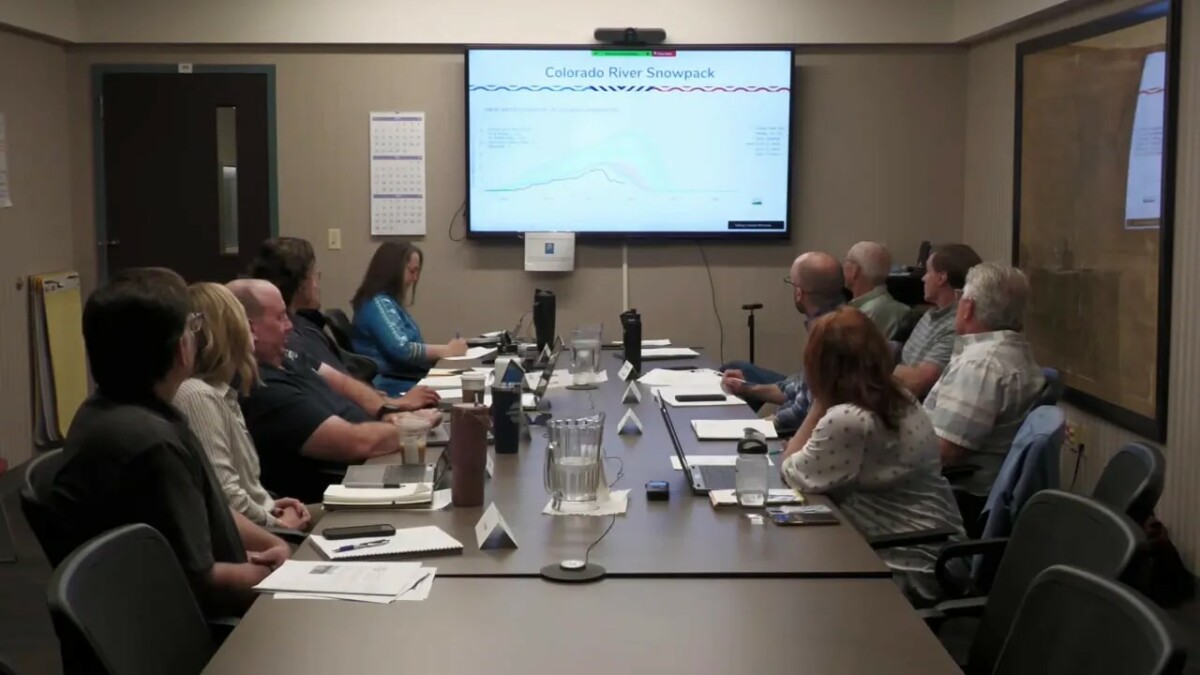
Snowpack and runoff are pointing in the wrong direction
The snowpack presentation highlighted problems in both of Longmont’s main supply areas:
- The Colorado River Basin, important because it supports Colorado-Big Thompson and Windy Gap supplies delivered through Northern Water
- The South Platte and St. Vrain Basin, which directly affects native basin supplies
For the South Platte Basin, the typical peak snowpack is about 16.1 inches of snow water equivalent in late April. This year, the basin peaked much earlier, on March 17, at only 8.5 inches.
That is barely above the infamous 2002 drought year, which peaked at 8.4 inches. In fact, staff said this year had been tracking similarly to 2002 until warmer-than-average temperatures accelerated runoff in March.
That early runoff is a problem because it sends water downstream before the main irrigation season, reducing the amount available when demand really ramps up.
The drought monitor outlook also suggests that drought conditions are likely to persist for at least the next three months. There are hints that El Niño conditions might improve late-summer moisture, but staff said plainly they are not planning around uncertain forecasts.
The seven-year design drought is doing exactly what it was supposed to do
One of the more technical parts of the discussion focused on Longmont’s seven-year design drought. This model was built around a one-in-100-year drought assumption and combines several historically dry years into a planning sequence.
According to staff, the city’s current supply conditions are tracking this drought model fairly closely. That is actually reassuring from a planning standpoint. It suggests the city’s raw water master planning has been robust and realistic.
That long-term planning is part of what makes Longmont different. The city’s supply portfolio has been built over decades, including:
- native basin water rights
- storage in key reservoirs
- transbasin supplies
- the long-standing raw water requirement policy adopted in 1964
That policy, which requires historic water rights transfers or cash-in-lieu for annexation and development, came up repeatedly as a cornerstone of the city’s current resilience.
What the numbers say about current drought status
The board reviewed a key planning threshold: the ratio of available supply to projected demand.
At the time of the meeting, that ratio was about 133%. Under Longmont’s framework, a mild drought response is triggered when supply falls between 120% and 135% of demand.
So yes, 133% is close to the top edge of that mild range. Board members noted that. But staff also pointed out that as the season goes on:
- actual demand data will become clearer
- available supply will likely shrink
- unused ditch rights on a given day can still be lost if demand is not there to capture them
In short, 133% may not stay 133% for long.
Button Rock storage provided another important indicator. The reservoir was about 19 feet below full. Dropping below 20 feet would push conditions toward the moderate category. Staff said they still expect some refill and do not currently expect to cross that threshold, but the city is close enough that caution makes sense.
What a mild drought response actually means
The phrase “mild drought response” can sound more dramatic than what was actually recommended.
For Longmont, this level is mainly about early, practical conservation, not strict enforcement.
Under the recommended mild response:
- City departments would make mandatory internal reductions in water use
- Residents, HOAs, and businesses would be asked for voluntary reductions
- The city would continue pushing best management practices for irrigation and efficiency
The goal is to preserve reserves and avoid having to move into more restrictive drought stages later.
Staff said this level of response is both operationally reasonable and publicly appropriate. Even though Longmont is in a better position than many neighboring providers, people are seeing drought across the state and expect some level of action. Board members acknowledged that residents often want to “be part of the solution,” even when local conditions are somewhat better than regional headlines suggest.
Why parks and golf courses may still appear to be watering a lot
One of the more useful conversations in the meeting dealt with a very visible issue: people see parks or golf courses getting watered and assume the city’s message is inconsistent.
Staff explained that this is where water management gets complicated fast.
Not all irrigation water is the same. Some sites use treated water, and some use raw ditch water. Those systems operate under very different constraints.
With raw water, timing is often dictated by ditch operations and water rights priorities. If the water is available only during a certain window, the user may need to take it then, even if that means irrigating during the day or earlier than the public expects. Otherwise, the choice may be to let the water pass unused back to the stream.
Staff gave examples of how that can happen:
- a ditch may deliver water only for a 24-hour period
- a ditch superintendent may split delivery between multiple users
- a junior water right may only be usable early in the season before it is called out
That means a park, course, or ditch user could be irrigating heavily in April not because they are ignoring conservation, but because that is the only time their raw water is actually available.
It is not easy messaging, and staff acknowledged that.
Golf course reductions already underway
Golf courses came up several times because they are highly visible and often a lightning rod for complaints during dry years.
Staff reported that the courses are already planning reductions. One example shared during the meeting was setting irrigation computers from 100% down to 90%, amounting to a 10% reduction. Courses are also avoiding filling lakes that do not directly support irrigation.
There was also discussion about which courses use treated water and which do not:
- Sunset Golf Course uses treated water
- The other city courses are designed around non-treated water supplies
Long-term plans include converting Sunset to raw water, but that is complicated by infrastructure costs, pumping requirements, ditch priority issues, and storage logistics.
Twin Peaks was mentioned as a positive example of efficiency improvements. Recent upgrades there have improved performance enough that staff said the course supports the philosophy of using non-treated water whenever possible.
Why Ute Creek looked rough and what was actually happening there
Another question involved work near Ute Creek and nearby wetlands. Staff clarified that this was not wetland work in the usual sense. The issue was that cattail growth and sediment had clogged parts of the ditch system, reducing the course’s ability to move water through its lakes and delivery channels.
The cleanup and dredging work was meant to:
- improve delivery efficiency
- reduce transit losses
- make sure water could continue flowing to downstream users
That last point matters because Ute Creek is not the end of the ditch. Other users, including Fox Hill and agricultural users farther downstream, still depend on that system.
Staff acknowledged the work may not look pretty right away, but emphasized that improved ditch function is a conservation measure in its own right.
When will ditch users north of Highway 66 get water?
The question of ditch availability north of Highway 66 came up as well, specifically around the Longmont Supply Ditch.
The short answer from staff was: water was available that day. The longer answer was much less certain.
With flows so low, any delivery can be interrupted quickly by changing calls on the river. Staff explained that when only 33 cfs is available at Lyons, there simply is not much to divide among multiple ditches and users.
For context:
- Current flow was around 33 cfs
- Historical average was around 76 cfs
- Typical runoff peak can be somewhere between 600 and 800 cfs
Staff were reluctant to say the basin had already hit peak runoff, but they were equally reluctant to promise anything much better ahead.
Best management practices added to the drought plan
The board also reviewed a new appendix to the city’s water shortage plan: Exhibit C, which lays out water efficiency best management practices.
The reason for adding it was straightforward. The drought response plan refers repeatedly to “best management practices,” so staff wanted to define exactly what that means for both customers and the city.
The best practices were compiled from established sources including:
- Colorado WaterWise
- Keep It Clean Partnership
- Western Resource Advocates
Examples discussed included:
- No watering between 10 a.m. and 6 p.m.
- Cycle-and-soak irrigation
- Smart irrigation controllers
- High-efficiency sprinkler heads
The phrase staff used was memorable and practical: don’t water when the sun’s out.
Longmont still does not have mandatory customer watering schedules, and that is intentional
One board member asked an entirely fair question: many Colorado communities always seem to have set watering days and times, so has Longmont just never done that?
The answer is essentially yes. Longmont has not historically imposed permanent mandatory watering schedules on customers the way some other cities do.
That is largely because of the city’s stronger water portfolio.
Staff explained how the city’s drought stages work:
- Mild response: voluntary customer reductions, mandatory internal city reductions
- Moderate response: mandatory three-day-per-week customer watering schedule
- Severe response: mandatory two-day-per-week watering schedule with more formal address-based timing
Some providers, including Denver Water and Greeley, operate under mandatory watering rules more routinely. Longmont has simply not needed to do that so far.
Staff also said clearly that they do not expect mandatory customer watering restrictions this year based on current supply planning.
Legislative updates were light, but one bill is worth tracking
The legislative portion of the meeting was brief.
Staff noted two newly introduced pieces of legislation:
- Safe drinking water in childcare centers and homes
- Revegetate or dry-farm formerly irrigated agricultural land
Another bill discussed earlier in the year, HB 26-1340, has now been introduced and was heading into committee. Staff noted that it currently applies only to Division 2, Arkansas River, so it does not directly affect Longmont right now. Still, they suggested it is worth watching in case similar ideas emerge later in other basins.
What happens next
The board formally voted to recommend that City Council adopt a mild drought response declaration. The expectation shared during the meeting was that Council would consider that recommendation on May 12.
The board also expects to continue work on several follow-up items in upcoming meetings, including:
- cash-in-lieu policy discussions
- possible board interviews and reappointments
- continued communication with HOAs and neighborhood groups
- ongoing coordination with parks, golf, and facilities staff
Staff also pointed residents toward the Connect Longmont event at the Senior Center as an opportunity to ask questions directly and learn more about current city projects and water conditions.
FAQ
Is Longmont running out of water?
No. Staff emphasized that Longmont is in a better position than many nearby providers because of long-term planning, storage, and a robust water portfolio. The issue is not immediate shortage, but the need to conserve early so the city stays in a strong position if dry conditions continue.
What does a mild drought response mean for residents?
For residents, HOAs, and businesses, reductions are voluntary, not mandatory. The city will strongly encourage conservation and best management practices, while city departments will be required to reduce their own water use internally.
Can I water my lawn in May?
Yes. The city’s guidance is that waiting until May is a best practice, and once May begins, watering is generally allowed. Delaying irrigation is still encouraged when possible, but there is no current mandatory restriction preventing it.
Are there mandatory watering days in Longmont right now?
No. Longmont does not currently have mandatory customer watering schedules. Those would come into play only under more restrictive drought stages, such as moderate or severe response levels.
Why are parks or golf courses still watering if the city is asking people to conserve?
Many parks and courses use raw ditch water rather than treated water. That water often must be used when it is available because ditch schedules, calls, and water rights timing can be inflexible. What looks wasteful can sometimes be a matter of using a limited delivery window before that water disappears.
What are the recommended watering hours?
The city’s best management practices say not to water between 10 a.m. and 6 p.m. The simplest version is: do not water when the sun is out.
Will HOAs be asked to cut irrigation by 10% too?
Yes, but only on a voluntary basis. Staff said HOAs have been reaching out and many seem interested in participating and programming their systems to reduce use.
What was approved regarding the two annexations?
The board recommended approval for two enclave annexations involving JARS Cannabis at 250 South Main and Native Roots at 19 South Sunset. Neither property has historic water rights attached, so future subdivision or redevelopment would require satisfying the city’s raw water deficit requirements.
That was the through-line of the whole meeting: Longmont is not panicking, but it is not pretending this year is normal either. The city has a strong water portfolio because previous generations planned for dry years like this. Now the job is to use that advantage wisely.