
Water Advisory Board – May 2026: Longmont’s Water Supply, Pricing, & Big Water Users
Longmont’s Water Board exists to help the City Council think clearly about raw water matters and keep a stable, sufficient, and suitable water supply for the community.
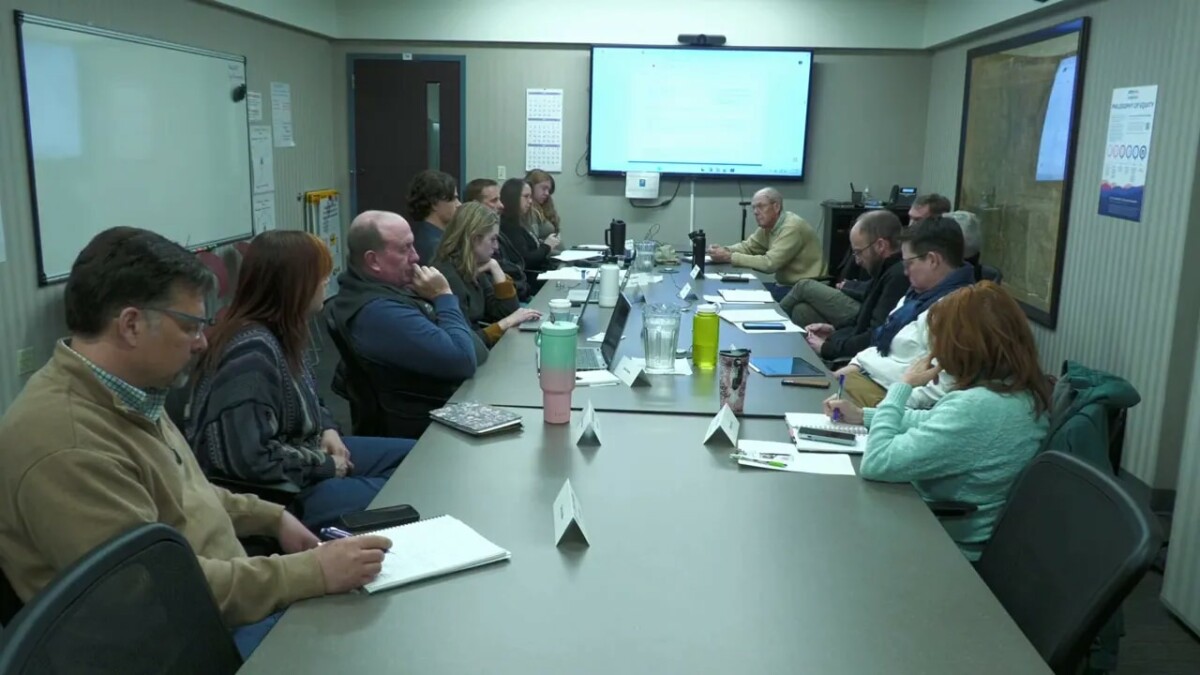
The May 18, 2026 meeting hit several issues that directly impact that goal. There was a timely water supply update, a substantial discussion about how the city should calculate its cash-in-lieu fee going forward, a reminder that Longmont already has policy tools for unusually large water users, and a strong report on conservation work that is already producing measurable savings.
If you want the official agenda materials, the city maintains them through its agenda management portal.
Table of Contents
- Current water conditions: lower creek flows, steady storage, and a snowpack that keeps acting strange
- Why the cash-in-lieu conversation matters so much
- What the board liked about the new methodology
- Why the board is wary of using CBT prices again
- What happens next on cash-in-lieu
- Large water users and data centers: Longmont already has a policy hook
- State legislation: expect more discussion around data centers
- Conservation update: Longmont is making real progress
- Who uses the most water in Longmont?
- Education and outreach: the Water Fair, Water Academy, and hands-on landscape change
- Drought response and why city operations matter too
- A small but meaningful reminder: water policy supports community life
- The broader takeaway from the May 2026 Water Board meeting
- FAQ
Current water conditions: lower creek flows, steady storage, and a snowpack that keeps acting strange
The meeting opened with a water status report that captured the reality many Front Range communities are living with right now: streamflows are below average, but storage is holding up reasonably well.
That morning, flow at the St. Vrain Creek gauge was reported at 138 cubic feet per second. The historic average for that time of year is 302 cfs. That is a notable gap, and it gives immediate context for why the city is paying close attention to every part of the supply system.
The current river calls were also laid out clearly:
- St. Vrain Creek call: Highland Ditch, priority date 1871
- South Platte call: Sterling No. 1, priority date 1882
On the storage side, the city’s reservoirs are in better shape than the streamflow number alone might suggest.
- Ralph Price Reservoir at Button Rock: elevation 6,388 feet and about 13,750 acre-feet in storage, roughly 85% full
- Union Reservoir: gauge height 19.74 feet and about 7,375 acre-feet, roughly 57% full
- Total reservoir storage at the end of April: about 59% full, almost identical to the same time last year
That prompted the natural question: if this year has felt drier than last year, why is storage basically the same?
The answer was that conditions have been unusual. Longmont has been gaining storage, just not as fast as it did last year. Even so, there was some encouraging news. The city had already stored about 1,300 acre-feet in Button Rock. If flows hold, there is at least a possibility of reaching spill conditions there. Whether that actually happens depends on how long the remaining snowpack lasts.
And that snowpack, as was noted in the meeting, has been doing what snowpack has increasingly done in recent years: acting a little unpredictable. It appeared to bottom out, then trend back upward again. That kind of volatility makes water management harder because planning depends not just on total snow, but on timing, melt rate, and how much of it actually turns into usable runoff.
For a city like Longmont, that is exactly why reservoir storage, policy discipline, and conservation all have to work together. You cannot manage a municipal water future on snowpack vibes alone.
What does cash-in-lieu mean?
The biggest policy discussion of the meeting centered on cash-in-lieu, which is one of those local government terms that can sound dry until you realize how important it is.
In simple terms, cash-in-lieu is the fee paid when development meets its raw water requirements through money instead of transferring actual water rights. That means the city needs a fee structure that is fair, defensible, and aligned with the real cost of securing new water supply over time.
If the number is too low, existing ratepayers effectively subsidize growth. If the number is too erratic, developers and investors cannot plan. And if the methodology is too dependent on a volatile market signal, the fee stops reflecting the city’s actual long-term water supply obligations.
That balance has been a challenge for years, and the board’s discussion reflected an effort to simplify the process without oversimplifying the economics.
A short history of Longmont’s approach
The city’s approach to cash-in-lieu has evolved over decades.
- 1963 to roughly 2012: the city relied heavily on CBT, or Colorado-Big Thompson, pricing
- 2012 to around 2022: the board moved away from relying so heavily on CBT because the market had become too volatile
- 2022 revision: the policy focused more on project-based supply costs, particularly Windy Gap Firming, Parkway Water, and Chimney Hollow
Now that the Chimney Hollow construction project is complete, Longmont is in a different position. The city is no longer pricing around an active major construction phase in quite the same way. That creates an opening to reset the method and use a more stable framework until the next major benchmark project, such as a Union Reservoir enlargement, is fully reassessed.
The proposed composite index
Staff walked through a proposed composite method based on three indexes:
- Producer Price Index (PPI)
- Consumer Price Index (CPI)
- Engineering News-Record construction index
Each of these captures a different part of the real cost of water supply development.
PPI reflects upstream production costs across a wide range of sectors, including construction-related materials. It covers thousands of product categories, with a meaningful slice tied to construction.
CPI is more familiar to most people and includes broad inflation categories such as transportation. Transportation matters more than people sometimes realize on water projects, especially for big infrastructure like dams, spillways, outlets, pipelines, and associated public works.
Engineering News-Record brings in construction-specific cost data with a more local or regional flavor than some national indexes. That matters because the cost of water infrastructure in Northern Colorado is not necessarily well represented by national averages or by project activity in entirely different regions.
The logic here is straightforward: if Longmont is trying to estimate what it will cost to create or expand water supply infrastructure in this part of Colorado, it makes sense to use a basket of indicators that reflects material costs, inflationary pressure, and actual construction pricing.
Why use a rolling average?
A key part of the proposal is that the numbers would be based on a five-year rolling average.
That matters because an index is only useful if it helps decision-makers avoid overreacting to short-term spikes. A drought year, an oil price shock, a supply chain bottleneck, or a sudden construction surge can all distort short-run pricing. If the city ties its fee too directly to those swings, the result is exactly the kind of volatility the board has already spent years trying to avoid.
The five-year average is intended to smooth the noise while still keeping the fee grounded in real cost trends. One board member compared the logic to diversification in a mutual fund. That is a pretty good analogy. Instead of hanging the city’s fee structure on one market variable, the approach spreads the risk across a broader set of indicators.
The board’s reaction was broadly favorable because the proposal seemed to land in the right place: responsive, but not twitchy.
What the board liked about the new methodology
Several themes came through in the discussion, and they are worth pulling together because they explain what “good policy” means in this setting.
1. Stability matters
The city has had years where the cash-in-lieu number moved around too much. That creates uncertainty for the development community and pressure on the city’s own planning. A more stable annual adjustment process gives everyone a clearer runway.
One of the strongest points made in the discussion was that investors and developers need to know what the landscape looks like for at least a reasonable planning cycle. Stability does not mean freezing the fee. It means adjusting it in a way that people can understand and anticipate.
2. Defensibility matters
Public fees need to be explainable. If a methodology is too complicated, overly dependent on one narrow market, or disconnected from actual infrastructure costs, it becomes harder to defend publicly and politically.
The engineering index, in particular, got support because it has a long history and a Denver-area component. That makes it easier to justify than a number that might be more heavily influenced by conditions in distant markets.
3. The fee should reflect what it really costs to create supply
The city code points the board back to the current cost of new water supply projects identified in the raw water master plan. That means the fee cannot just be a generic inflation number. It has to remain tied, at least conceptually, to what it would take to get real water to the treatment plant.
This is where future Union Reservoir enlargement analysis becomes important. Staff indicated that a reassessment of enlargement cost is underway, though not yet ready. Once that work is available, it can establish a more current project benchmark. The indexes then serve as a practical adjustment tool between major cost recalibrations.
Why the board is wary of using CBT prices again
Even though CBT pricing remains in city code as something the board can consider, there was clear skepticism about bringing it back to the center of the calculation.
That skepticism came from two places.
Volatility
Years ago, the board moved away from using CBT as the main reference point because the market was too volatile. One member put it plainly: if the city deliberately shields the development community from that volatility when prices are swinging wildly, it does not make much sense to go back to CBT once the market temporarily calms down. That would effectively shift risk onto the utility and its customers.
That is an important public finance point. Municipal water policy is supposed to create long-term reliability, not chase whichever commodity signal happens to be calmer this month.
Limited long-term relevance
There was also a practical concern that CBT is not a forever market. It has an expiration horizon in the sense that there are only so many exchangeable units available. Tying a long-term fee structure to an asset with a constrained future market may not make sense over the long run.
In other words, even if CBT still has value, it may not be the right yardstick for what Longmont is trying to accomplish.
That does not mean the city will ignore CBT transactions entirely. Staff noted that CBT data will likely still be presented, because the code says it should be looked at. But “look at” does not mean “use as the controlling factor.” The board can consider it, document it, and decide it is not the most pertinent measure for the recommendation at hand.
What happens next on cash-in-lieu
Staff’s direction was clear by the end of the discussion. The board signaled support for the composite index approach, and staff expects to return at the next quarterly review with a proposed updated fee number.
Because the calculation uses a rolling average, the new number is not expected to swing dramatically from the preliminary estimate already shown. That was part of the appeal. The process should produce changes that are incremental and understandable rather than abrupt and disruptive.
The recommendation will ultimately go to City Council later in the year for implementation beginning in January.
For anyone who follows municipal water policy, this is one of the more significant takeaways from the meeting. The city is not just adjusting a fee. It is trying to build a more durable framework for how that fee gets set.
Large water users and data centers: Longmont already has a policy hook
The next substantial conversation dealt with something that has been coming up more often across Colorado: large water users, especially in the context of data centers.
The point of this agenda item was not to announce a specific project. It was to remind the board, and by extension the public, that Longmont already has a mechanism in place if a major water user comes forward.
This is not a brand-new issue for the city. Staff referenced earlier eras when the city was having similar discussions about large industrial users, including Longmont Foods and the former Golden-based industrial conversations along I-25. What is new is the current form of the question. Today, a lot of the public conversation is about hyperscale data centers and whether communities should be preparing now for their water and energy impacts.
How Longmont defines a “large water user”
In this context, the threshold is simple:
A user projected to consume more than three acre-feet of water per acre is treated as a large water user.
That standard is already embedded in Longmont’s raw water requirement policy in the municipal code. If a project exceeds that level, the city has authority to determine the amount of additional water required and the timing of transfer to the city.
Put plainly, if a prospective high-water user wants service, they are not just showing up and plugging into the system. The city already has policy language to require that they bring water to cover the demand.
Why this matters in the data center conversation
Data centers are often discussed first in terms of electricity, because their power demands can be enormous. But water also matters, especially where cooling systems rely on evaporative processes or other water-intensive operations.
The board discussion acknowledged that some concerns go beyond water supply alone. Wastewater management, infrastructure sizing, environmental effects, and utility system compatibility all become part of the equation.
One useful reminder from the discussion was that high-water-use projects are not just about total demand. They can also trigger major infrastructure implications:
- Oversizing water lines
- Planning delivery capacity in advance
- Managing wastewater quality and treatment issues
- Coordinating with electric and broadband utilities
That last point came up in a lighter moment, but it was still revealing. Longmont has a municipal broadband system, NextLight, that could be relevant to data center siting. The joke was that nobody wants their streaming speed to slow down because a giant facility arrived without enough planning. Funny, yes. Also a useful reminder that these projects affect more than one utility department.
Acre-feet, gallons, and scale
There was also some practical back-and-forth about what these water numbers actually mean.
A rough comparison shared at the meeting was that one million gallons per day is about one acre-foot per day. More precisely, an acre-foot is about 325,851 gallons, but for quick order-of-magnitude thinking, the point was clear: once a facility gets into the multi-million-gallon-per-day range, it is operating at a scale that deserves special review.
The old Longmont Foods site was used as a local benchmark. At peak use, it consumed about one million gallons per day. Later, after process changes, that dropped to about half a million gallons per day.
That gives useful historical perspective. Longmont has seen heavy industrial demand before. It just has not been common, and it has never been something to treat casually.
So is there even room for a data center?
The conversation turned briefly to land availability, which is a reasonable question because these are not tiny projects. Large data centers need substantial acreage and proximity to major electrical infrastructure, especially substations. Airport-area industrial lands and adjacent areas were mentioned as the most plausible geography, though not necessarily in a way that suggests abundant ready-made sites.
That point matters because land, power access, and water access all have to line up at the same time. Communities do not become data center locations just because they have one of the three.
State legislation: expect more discussion around data centers
The board also received a short legislative update. The Colorado General Assembly had adjourned on May 13, and there were not major new water-specific action items to unpack at length during this meeting.
But one thing was clear: data centers are not going away as a policy topic.
At the state level, legislation this year touched on energy and environmental impacts tied to data centers, even where water was not the primary focus. Staff noted that this issue is likely to keep resurfacing, and that Colorado is still in the stage of broader public and legislative discourse.
That tracks with what water professionals have been discussing elsewhere in the state. At forums like the Colorado Water Congress, data centers have become part of the larger conversation about how Colorado balances economic growth, resource constraints, infrastructure readiness, and environmental stewardship.
In other words, Longmont is not an outlier here. It is part of a broader statewide and regional conversation that is still taking shape.
Conservation update: Longmont is making real progress
If the cash-in-lieu discussion was the most policy-heavy part of the meeting, the conservation update was arguably the most encouraging.
The city reported that in 2025 its gross per capita daily water use was 127 gallons per person per day. That represents an 8% reduction from 2022.
It is also part of a longer trend. Longmont’s previous water efficiency plan, adopted in 2017, aimed for a 10% reduction in total demand from 2002 levels. The updated 2025 plan introduced a newer goal: a 3% reduction in gross per capita use by 2030, using 2022 as the baseline.
By the numbers shared in the meeting, the city beat both targets last year:
- Gross per capita daily use: down 8% from 2022
- Total water demand: down 12% from 2002 levels
That is not just a paper achievement. It reflects real savings across multiple programs.
Where the water savings came from
The conservation team highlighted a mix of partnerships, rebates, outreach, code changes, and city operational improvements. Combined, these efforts produced an estimated 13.4 million gallons in savings.
Resource Central programs
Programs with Resource Central saved nearly 4 million gallons through:
- Lawn replacement projects
- Garden in a Box discounts
- Slow the Flow appointments
- Water-wise yard seminars
There were also 381 attendees at the cumulative seminar offerings, which matters because education tends to create recurring savings year after year.
Northern Water partnerships
Partnerships with Northern Water contributed another cumulative 4 million gallons through landscape consultations, irrigation audits, and grants. Commercial, industrial, and institutional audits were available last year, though that specific service has since been discontinued.
Efficiency Works rebates
Through the Efficiency Works partnership, which wrapped up at the end of 2025, the city issued 210 rebates. Most were for outdoor equipment. Since each individual rebate counts separately, the total includes multiple rebate items per customer where applicable.
Growing Water Smart and internal city operations
The city’s Growing Water Smart effort brought multiple departments together around water efficiency. One standout result was a partnership with the water meter coordinator to review parks meters, identify problems, and fix leaks.
That alone saved about 4.2 million gallons on parks properties.
That is a great example of why conservation is not just about asking residents to do less. Sometimes the biggest wins come from finding the water you are already losing and stopping it from leaking away.
Who uses the most water in Longmont?
The conservation report also revisited a basic but important fact: residential customers remain the city’s largest water-use category.
That is why Longmont has historically focused so much of its programming on households and landscapes. Outdoor irrigation is often where the biggest savings opportunities live.
But the second-largest category is small commercial. That is why staff said 2026 will bring a stronger push into business-oriented conservation programming as well.
This is a smart pivot. Mature conservation programs eventually need to go where the next meaningful savings are, rather than simply repeating the same outreach forever.
Education and outreach: the Water Fair, Water Academy, and hands-on landscape change
One of the better parts of the meeting was hearing how conservation work is being translated into actual public education and visible community projects.
The Longmont Water Fair
The city’s second annual Longmont Water Fair drew 325 attendees, with a remarkable 61% post-event survey response rate. That is unusually strong feedback participation and suggests people were genuinely engaged.
The event focused on interdisciplinary, multicultural, and intergenerational water education, using interactive stations staffed by local partners. That kind of format matters because water literacy is not built by handing out a pamphlet and hoping for the best.
The upcoming third annual Water Fair, scheduled for June 14, shifts the theme from where your water comes from to where your water goes. That means more attention to downstream users, watershed stewardship, irrigation, and local impacts.
Partners expected to be involved include the Resilient St. Vrain Project, Keep It Clean Partnership, the local district, and a farmers coalition focused on irrigation. That framing is useful because it helps residents connect household water choices to the broader river system.
The Water Academy
Building on the momentum of the Water Fair, the city also ran its first Water Academy, developed with Environmental Services. This was more adult-focused and offered a deeper look at Longmont’s water system, including treatment and the annual drinking water quality report.
Thirty-five community members attended, and the feedback was strong enough that staff hopes to continue the program on an every-other-year basis if funding and capacity allow.
This kind of programming does something that formal reports often cannot. It helps people understand not just that water systems are complex, but why they cost what they cost and why policy choices have to be made carefully.
Turf replacement and demonstration sites
Several highly tangible landscape projects were highlighted as well.
- Longmont Public Media: 1,000 square feet converted, saving an estimated 4,000 gallons annually
- Street Station: 2,000 square feet of non-functional turf converted to a waterwise demonstration garden, saving about 29,000 gallons annually
- Roosevelt Native Area: 700 square feet of native forb and prairie-style landscaping, saving about 3,000 gallons annually once established
The Longmont Public Media project was especially notable because it became a hands-on educational effort through CSU Extension’s Master Gardener program. Participants removed grass, planted the new landscape, and are maintaining it as part of the learning process.
That is a strong model for civic landscape change. It reduces water use, creates visible examples, and turns the project itself into public education.
Drought response and why city operations matter too
The conservation team also noted that City Council had recently declared a new drought shortage response. One component of that response is a 10% reduction on city-owned properties, including facilities.
That is an important signal.
When a city asks the community to think seriously about water use, it needs to apply that same discipline to parks, medians, facilities, and public landscapes. Bringing additional expertise into the conservation team, including systems engineering and green building knowledge, should help Longmont look at water efficiency not just site by site, but across city systems.
That is where some of the most durable gains are usually found.
A small but meaningful reminder: water policy supports community life
Near the end of the meeting, one board member brought up something easy to overlook in policy-heavy discussions: community traditions depend on water too.
The annual kids fishing program at Golden Ponds recently marked its 24th year, supported by Colorado Parks and Wildlife, Rotary, the Optimist Club, Trout Unlimited, and others. The simple point was that programs like that do not happen without reliable water quality and enough water in the system.
That is worth sitting with for a minute.
Municipal water policy is not just about acre-feet, indexes, engineering estimates, and code language. It is also about whether neighborhoods, parks, habitat areas, fisheries, and long-running local traditions can keep functioning.
Water boards spend a lot of time discussing technical details because those details are what keep the bigger picture intact.
The broader takeaway from the May 2026 Water Board meeting
Put it all together, and the meeting told a pretty coherent story about where Longmont is right now.
- The city is managing through below-average streamflows with reservoir storage that remains serviceable.
- It is moving toward a more stable and defensible way to calculate cash-in-lieu fees.
- It already has a policy mechanism for unusually large water users, including future industrial or data center proposals.
- Its conservation work is producing real, measurable reductions in water demand.
- And it is trying to pair policy with public education, visible landscape change, and responsible city operations.
None of that means the challenges are gone. Snowpack remains erratic. Supply planning is never finished. Growth questions are not getting simpler. But there was a notable level of seriousness and practicality in the discussion.
That is usually what good local water governance looks like. Not flashy. Not simplistic. Just a steady effort to make sure the city can meet future demand without losing sight of fairness, resilience, and common sense.
FAQ
What is Longmont’s Water Board responsible for?
The Water Board advises the City Council on raw water matters related to maintaining a stable, sufficient, and suitable water supply for the community and its residents.
How full were Longmont’s reservoirs in May 2026?
At the time of the meeting, Button Rock storage was about 85% full and Union Reservoir was about 57% full. Combined reservoir storage at the end of April was around 59% full, roughly the same as the year before.
What is cash-in-lieu in Longmont water policy?
Cash-in-lieu is the fee paid when development satisfies its raw water obligation with money instead of transferring actual water rights. The city uses that fee to reflect the cost of securing future water supply for growth.
What indexes is Longmont considering for the cash-in-lieu calculation?
Staff proposed a composite of the Producer Price Index, the Consumer Price Index, and the Engineering News-Record construction index, using a five-year rolling average to reduce volatility.
Why not just use CBT prices?
The board expressed concern that CBT pricing can be too volatile and may not be the best long-term measure for municipal water planning. It can still be reviewed as part of the record, but there was little support for making it the main driver again.
How does Longmont define a large water user?
For this policy discussion, a large water user is generally a project expected to use more than three acre-feet of water per acre. If a project exceeds that level, the city can require additional water and determine the timing of transfer.
Are data centers a current water issue in Longmont?
There was no specific project announced, but staff discussed data centers because they are increasingly part of statewide conversations around water, energy, and infrastructure. Longmont already has policy tools that would apply if a large water-using project came forward.
How much did Longmont reduce water use in 2025?
Longmont reported gross per capita daily water use of 127 gallons per person, an 8% reduction from 2022. Total water demand was also down 12% from 2002 levels, exceeding both current planning targets.
How much water did conservation programs save?
The city estimated 13.4 million gallons of savings from its 2025 conservation programs, including lawn replacement, audits, rebates, education, and city leak detection work.
What is the Longmont Water Fair?
The Longmont Water Fair is a public education event focused on water topics across generations and communities. The upcoming edition is centered on where water goes, including downstream impacts, irrigation, and watershed stewardship.