
What is Jack’s Solar Garden? Inside America’s Leading Agrivoltaics research Site
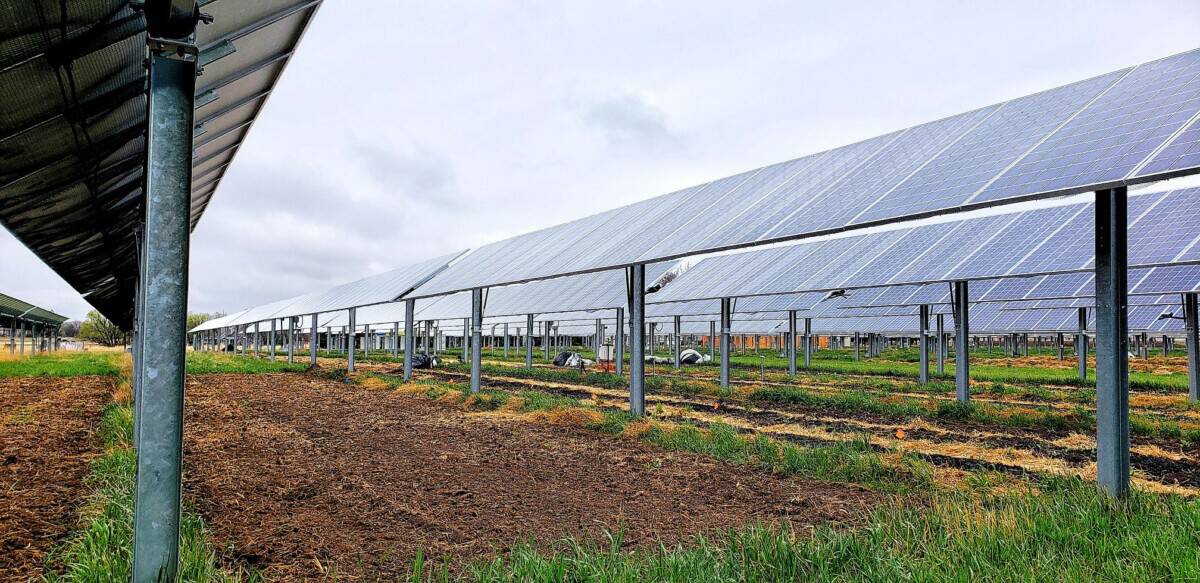
On a 24-acre farm in Boulder County, Colorado, 3,276 solar panels rise above rows of vegetables — and beneath them, researchers, farmers, and educators are rewriting the rulebook on how land can be used. Jack’s Solar Garden, located just off North 95th Street in Longmont, is the country’s premier agrivoltaics research site and the most-visited solar array in the United States. Unlike most solar farms in Colorado, it is simultaneously a working agricultural operation, a community solar energy producer powering more than 300 homes, and a public education destination that has welcomed nearly six thousand visitors since its opening.
Cover photo credit: AJ Puckett, NCAT
What is Jack’s Solar Garden?
Jack’s Solar Garden sits at 8102 North 95th Street in Longmont, Colorado, within Boulder County. The site’s 3,276 solar panels form a 1.2 MW community solar garden — generating enough electricity to power more than 300 homes. The array operates as a community solar installation, which means subscribers across the region receive credit on their electricity bills for the energy the panels produce — no rooftop installation required. Since opening, the farm has welcomed more than 5,500 visitors, making it one of the most actively toured agricultural and energy sites in the state.
A Working Farm, Not Just a Power Plant
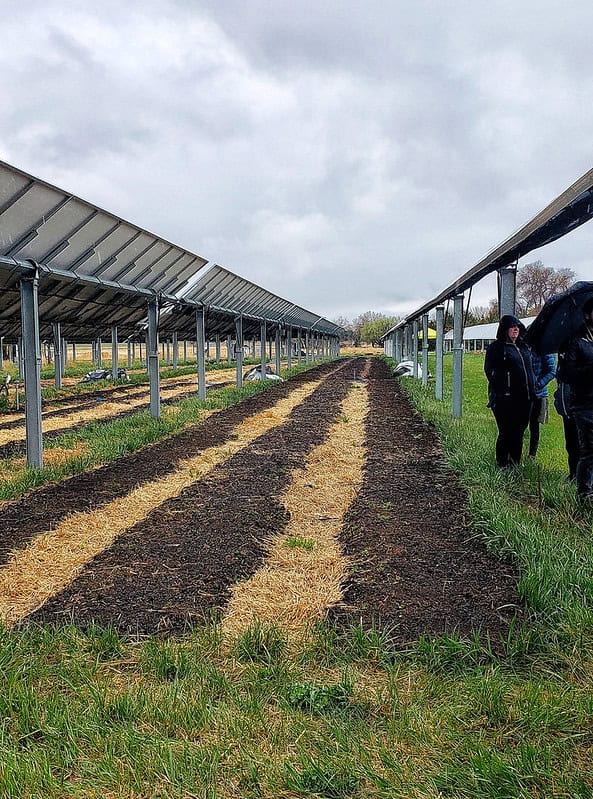
On any given day at Jack’s, it’s common to see Byron Kominek driving a tractor beneath rows of solar panels, with farmhands tending, harvesting, or sowing crops in the furrows below. The panels themselves are mounted six to eight feet above the ground on single-axis trackers, creating distinct microclimates that farmers actively work with rather than around — planting shade-tolerant greens beneath the densest panel coverage and sun-loving crops in the gaps between rows.
The farm has grown a wide variety of crops over the years, including tomatoes, cucumbers, peppers, potatoes, herbs, berries, corn, lettuce, and clary sage. On its 5-acre demonstration plot, the farm has produced roughly 8,300 pounds of organically grown produce in a single season — output researchers point to as evidence that solar energy production and food production can share the same acreage without one undermining the other.
Surrounding the array is a 25-foot-wide living fence of more than 3,000 native trees, shrubs, and pollinator plants, installed by Audubon Rockies. This perimeter habitat attracts pollinators that support crop yields on the farm itself while helping retain soil moisture and reduce runoff during heavy rain.
Why It Is Nationally Significant
Jack’s Solar Garden holds a distinction that no other site in the country can claim: it is the premier agrivoltaics research site in the United States and the most-visited solar array in the country. Of the several hundred agrivoltaic sites now operating nationwide, the vast majority pair solar with pollinator habitat or livestock grazing — sites specifically growing food crops beneath the panels, like Jack’s, remain far rarer.
Comparable projects include the Aurora Solar Project in Minnesota, which combines solar with native prairie habitat, and smaller research installations at Arizona’s Biosphere 2 and Manzo Elementary School, but none matches the scale or combination of commercial energy production, food production, and public education found at Jack’s. Governments, solar developers, and farmers look to Jack’s as a working model for how renewable energy and active agricultural production can coexist — and thrive — on the same piece of land. Understanding why requires a closer look at what agrivoltaics actually involves.
What does Agrivoltaics mean?
Agrivoltaics is the co-location of agriculture and solar energy infrastructure on the same piece of land. The key insight driving the concept is that solar panels can serve a dual purpose. Not only do they block the sun, the panels also create microclimates beneath and around them, producing partial shade, reduced evaporation, and cooler surface temperatures that can actively benefit crops and animals rather than competing with them. The concept directly challenges the long-held assumption that solar development requires converting productive farmland into an energy-only land use.
What It Looks Like in Practice at Jack’s
At Jack’s Solar Garden, single-axis tracking solar panels rotate throughout the day, and researchers and farmers study how the shifting shade and microclimate conditions affect crop growth, soil health, and water use beneath the elevated array. From 2021 through 2025, Sprout City Farms operated the largest agrivoltaic vegetable production research site in the United States at Jack’s — cultivating tomatoes, cucumbers, peppers, and tender greens directly under the panels.
The results were instructive: the partial shade proved especially beneficial for protecting cool-weather crops from Colorado’s intense summer sun, while sun-loving crops continued to thrive in the gaps between panel rows.
Research and Partners at Jack’s Solar Garden
The farm has drawn research partners from across the country to study what agrivoltaic production can achieve at scale. Key partners include:
- University of Arizona — worked closely with Sprout City Farms on meticulous crop data collection and analysis across the research farm plots
- National Renewable Energy Laboratory (NREL) — contributing expertise in solar energy systems and land use research
- Colorado State University — studying regional agricultural applications of agrivoltaics
- Colorado Agrivoltaic Learning Center — coordinating education and research programming on site
The research tracks the climate-resilient impacts of co-locating solar panels with vegetable production — including microclimate effects, crop yields, water use efficiency, and methodologies for multi-crop market farming within an elevated array. In 2022, the farm was a highlighted stop on the AgriSolar Clearinghouse national “Follow the Sun” tour, bringing national visibility to the work underway in Longmont.
Audubon Rockies Pollinator Habitat
Audubon Rockies has established a large pollinator habitat around the solar array, supporting native bee populations, birds, and other pollinators. The habitat makes Jack’s an even more powerful case study in sustainable agriculture.
Policy Impact and Local Government
Jack’s Solar Garden worked directly with Boulder County to update their Land Use Code to permit agrivoltaic development — creating a regulatory pathway that other Colorado municipalities can now follow. The City and County of Boulder’s support was essential to the project’s development. To encourage similar policy action elsewhere, free tours are offered to Colorado-based government officials who want to learn firsthand how the Jack’s model came together.
The Colorado Agrivoltaic Learning Center
The Colorado Agrivoltaic Learning Center (CALC) is the nonprofit arm of Jack’s Solar Garden, operating as a project of the Colorado Nonprofit Development Center. Its mission is to connect students, community members, and private groups to clean energy, local food, and responsible land use management through the lens of agrivoltaics. CALC brings that mission to life through on-site tours, student educational programs, and private corporate events at the farm — making Jack’s one of the most accessible agricultural and energy education destinations in Colorado.
Who Can Visit?
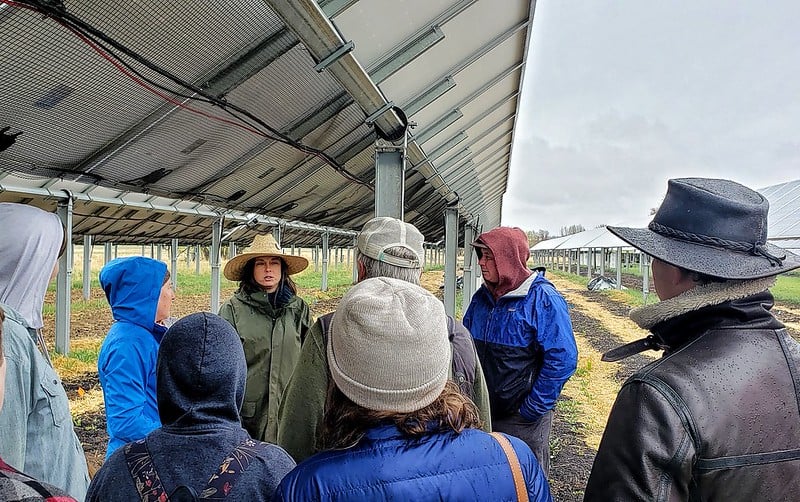
Visitors come from every background — students, community members, government officials, corporate groups, and anyone curious about where renewable energy and farming intersect. On tour, they see firsthand how the microclimates created by the single-axis tracking panels affect the vegetation and people working beneath them. The experience is both grounding and eye-opening: a living demonstration that connects visitors to the science of solar energy and the everyday realities of farming in Colorado in a way that no classroom or video can replicate.
How to Tour Jack’s Solar Garden
Public Tour Details
Public tours of Jack’s Solar Garden are offered through the Colorado Agrivoltaic Learning Center and are open to visitors of all backgrounds. A few things to know before you go:
- Location: 8102 North 95th Street, Longmont, CO 80504
- Tour length: Approximately one hour
- Format: Fully outdoors, with walking on uneven farmland — sturdy footwear is strongly recommended
- Contact: (970) 344-8066 or [email protected]
- Booking: Tours can be reserved directly through the Jack’s Solar Garden website
Special Tour Access
Public tours are available to community members, families, student groups, and organizations of all kinds. Colorado-based government officials can access free tours focused on the land use policy work and how Boulder County’s regulatory support made the project possible. Private groups and corporate organizations can arrange customized visits and events through the Colorado Agrivoltaic Learning Center — including farm dinners and group educational experiences.
Who was Jack? How the Solar Garden Came to Be
In 1972, Jack Stingerie — grandfather of farm founder Byron Kominek — purchased a 24-acre farm in Boulder County, Colorado. Jack retired on the land, growing hay and alfalfa until he passed away in 1980. The property then passed to his daughter and Byron’s mother, Eloise Kominek.
In 2018, Byron and his father Kurt Kominek founded Jack’s Solar Garden in Jack’s memory — and in recognition of what that land could offer the broader community. The name honors the man whose decision to purchase a quiet piece of Boulder County farmland more than fifty years ago made everything that followed possible.
FAQs
Where is Jack’s Solar Garden located?
8102 North 95th Street, Longmont, Colorado 80504 — in Boulder County, just off North 95th Street.
What is agrivoltaics?
Agrivoltaics is the co-location of agriculture and solar energy on the same land, where the microclimates created by solar panels provide benefits to crops or animals beneath and around them.
Can I visit Jack’s Solar Garden?
Yes — public tours are available through the Colorado Agrivoltaic Learning Center and last approximately one hour.
Is Jack’s Solar Garden the largest agrivoltaics site in the country?
It is the country’s premier agrivoltaics research site and the most-visited solar array in the United States.
How much energy does Jack’s Solar Garden produce?
The 3,276-panel array at Jack’s generates 1.2 MW — enough to power more than 300 homes.
What is the Colorado Agrivoltaic Learning Center?
The Colorado Agrivoltaic Learning Center is the nonprofit arm of Jack’s Solar Garden that provides public education, student programs, and community tours at the farm.