
Water Advisory Board – June 2026: Spring Gulch Concerns, Reservoir Updates, and Future Projects
The June 15, 2026 meeting of Longmont’s Water Board moved from water rights and reservoir storage to neighborhood water quality concerns, then into recreation operations at Union Reservoir, and finally into one of the board’s core policy duties: updating the cash-in-lieu value for raw water requirements.
If you want the official meeting materials, the city’s agenda management portal is the place to start.
Table of Contents
- Quick meeting snapshot
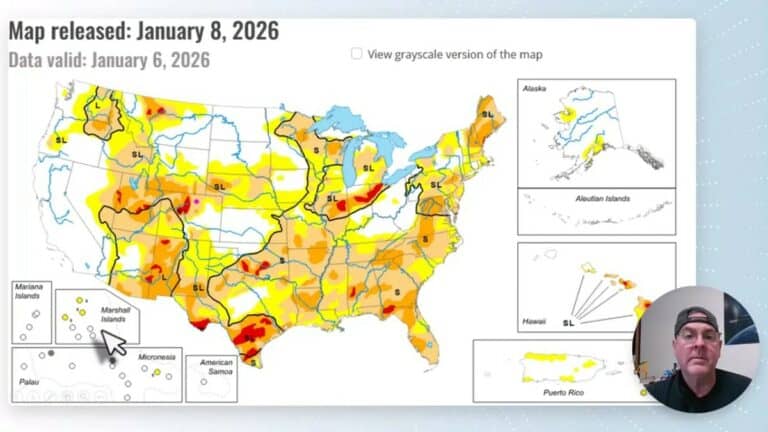
- Longmont Drought Picture & Water Conditions
- Spring Gulch Stagnation & Odor
- Why Spring Gulch is hard to fix
- The long term fix: a low flow channel
- Interim solutions: limited, imperfect, but still worth pursuing
- Water quality and safety: what is known and what still needs testing
- Cash-in-lieu water rights: the board makes a key policy recommendation
- Union Reservoir: more water, same hustle
- Boating, fishing, and shoreline use at low water
- Aquatic nuisance species in Union Reservoir
- Infrastructure projects at Union Reservoir
- Union and McIntosh: low water problems look different in each place
- Where the board may focus next
- FAQ
- Final takeaway
Quick meeting snapshot
The meeting opened with routine business, including approval of prior minutes, then got into several substantive updates:
- Water conditions and calls: Staff reported active calls on several systems and gave storage updates for Button Rock and Union Reservoir.
- Spring Gulch public comment: Pleasant Valley residents raised concerns about stagnant water, odors, possible water quality issues, and the slow timeline for a larger fix.
- Cash-in-lieu valuation: The board recommended a 5.7 percent increase, setting the value at $63,000 per acre foot.
- Union Reservoir operations: Staff shared a broad update covering water levels, boating, staffing, public safety, aquatic nuisance species inspections, fishing improvements, and infrastructure projects.
- Board priorities: Members talked about how the board might spend time in the future as some recurring policy work becomes more standardized.
Longmont Drought Picture & Water Conditions
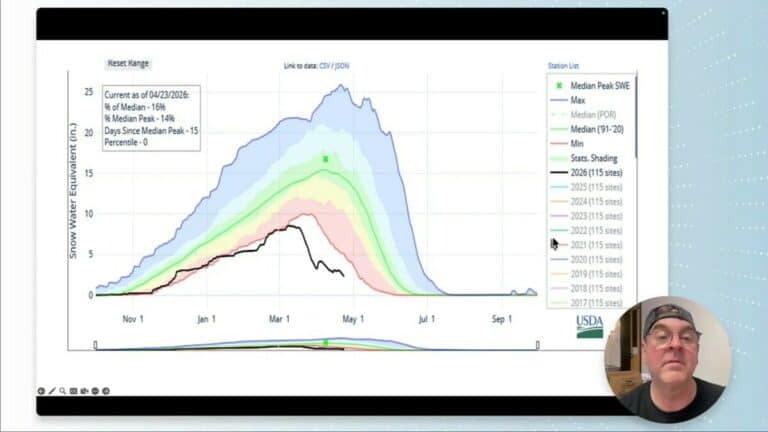
The first substantial report focused on water conditions across the system. There was a note of relief in parts of the update, especially around storage, but nobody pretended the broader picture was easy.
Several calls were active on the main stem and related ditches, and staff also mentioned that additional measurement structures are still needed before a future call on Dry Creek can be fully supported.
There was also discussion of several specific ditches where improved coordination and better data collection are still needed. One of the recurring themes of the meeting was that local water management often depends on seemingly small operational details. A structure that is installed but not yet tied into the right reporting system can slow down decision making. A ditch with incomplete measurement can limit how confidently staff can act.
On storage, Button Rock was essentially full and spilling, which is about as encouraging as it sounds. The reported volume was a little over 16,000 acre feet. Union Reservoir had also improved from the prior month, moving from roughly 58 percent full to a bit over 60 percent.
And yet the broader mood remained realistic. Conditions were still described as dry and hot. That may be one reason the meeting later circled back again and again to flow, or more specifically the lack of enough moving water to keep systems healthy.
Spring Gulch Stagnation & Odor
The most engaged discussion of the day came when residents from the Pleasant Valley area addressed conditions in the Spring Gulch greenbelt. They came with a clear concern and a straightforward ask: help us understand what we are dealing with, who is responsible, whether the water poses a risk, and what can be done before the larger city project arrives years from now.
The issue is not subtle. Residents described standing and slow moving water, heavy vegetation, strong odors, and uncertainty about what is growing or decomposing in the channel. Some homes back directly to the area. People walk there, children are around it, and dogs get close to it. For nearby residents, this is not an abstract drainage concern. It is literally outside their windows.
One of the most striking points raised was how long this has been going on. Based on the discussion, the city has been aware of the problem for years, with references going back at least to 2018. Residents who moved in more recently said the issue has persisted throughout their time in the neighborhood and has become more noticeable, especially in recent years as smell and plant growth have worsened.
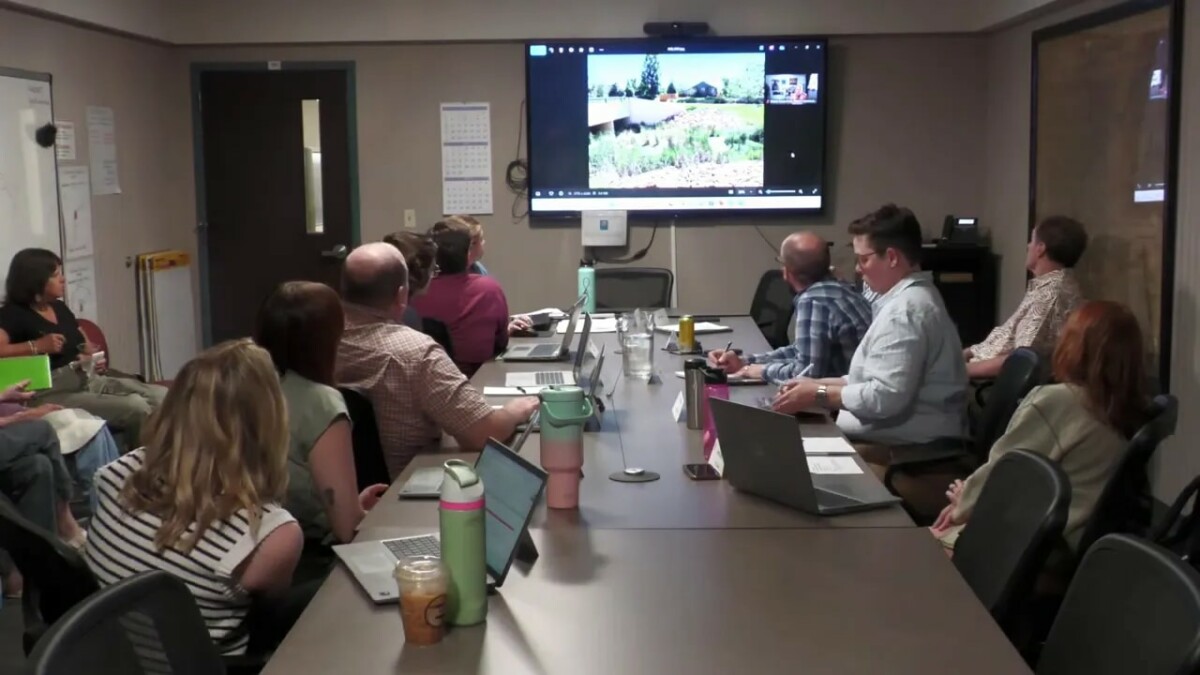
What residents wanted to know
The questions raised were practical and reasonable:
- Where does the water come from and where does it go?
- Can more dredging happen sooner to improve movement?
- What would water quality testing look like, and what would it cost?
- What can be done in the near term while the capital project remains years away?
Those questions pushed the board and staff into a useful explanation of what Spring Gulch actually is, and why it is proving so hard to manage.
Why Spring Gulch is hard to fix
Spring Gulch is not just a ditch, and that is part of the problem. Historically, it was described as a natural drainageway, likely fed by springs and low lying flows that naturally collect in the area. Over time, portions were enlarged or altered, and now the system functions partly like natural drainage, partly like stormwater conveyance, and partly like a maintained greenway next to residential development.
That mixed identity makes everything more complicated.
If this were simply a constructed ditch, maintenance could be more direct. If it were only a natural wetland, expectations might be different. But Spring Gulch sits in the middle. It receives natural groundwater and spring influence. It also receives agricultural return flows from fields to the north. On top of that, major storm drain infrastructure feeds into it from developed areas, including large point discharges that route water from broader drainage basins back toward St. Vrain Creek.
In other words, it is acting like a collector for whatever ends up there, but without enough sustained flow or grade to flush itself effectively.
Too wide, too flat, too slow
Board members and staff repeatedly came back to the same physical problem. The channel is wide and flat at the bottom, but only carries a small amount of regular low flow. That means water spreads out, slows down, and gets trapped in vegetation. Once cattails and other growth become established, they catch more debris and further reduce movement.
The result is exactly what residents described: stagnant pockets, decomposing vegetation, algae-like growth, smell, and a general sense that the whole thing is not moving enough to stay fresh.
This also explains why even storms are not always enough to reset the system. A couple of strong events might add water, but if the geometry and vegetation are working against movement, that water may not do much more than temporarily push around a portion of the problem.
It is also a permitting issue
Because Spring Gulch functions as a natural drainageway, work there is subject to more environmental oversight and permitting than a routine ditch cleanout would be. Staff referenced federal water considerations, which means a simple mechanical fix may not be simple at all once regulatory requirements are taken into account.
That does not make the resident concerns any smaller. It just shows why a visible problem can sit around longer than anyone wants.
The long term fix: a low flow channel
The city has a capital improvement project on the books, tentatively in the 2028 to 2029 range, to redesign this section of Spring Gulch. The concept described at the meeting was to build a low flow channel within the larger corridor.
That means instead of allowing small flows to spread across a broad flat bottom, a narrower and deeper meandering channel would carry the normal day to day water. The larger corridor would still exist to handle flood events, but ordinary water would have a more defined path.
Think of it as creating a better fit between the amount of water usually present and the shape of the channel carrying it.
The board described this as similar in concept to modern stream restoration work where a broad floodplain remains available, but the actual low flow is concentrated in a smaller naturalized thread. In theory, that would improve movement, reduce stagnation, and make the corridor easier to maintain.
It also sounds like one of those projects that probably should have happened earlier in the development history of the area. More than one comment hinted at that.
Why it is not happening tomorrow
Two reasons came up over and over:
- Funding timing
- Design maturity
The project exists conceptually, but it does not sound like it is deep into design yet. Staff described it as being at a very early planning level. That means even if everyone agrees it is needed, there is still a lot of work between recognizing a problem and breaking ground on a solution.
That is exactly why residents pressed for interim options.
Interim solutions: limited, imperfect, but still worth pursuing
Past efforts have included burning back cattails and dredging adjacent ditch systems in an effort to restore some flow. Those measures may help temporarily, especially with odor and vegetation control, but they do not address the underlying geometry of the gulch.
Access is another problem. Large equipment cannot easily move through the area, and any excavation creates a second challenge: what to do with the removed material. As anyone who has ever priced earthwork knows, digging is only part of the cost. Hauling and disposal can be the bigger budget hit.
There was also mention of a spider excavator, the sort of specialty equipment used in difficult terrain. That may improve access, but again, it does not solve the bigger material handling and funding issues.
One board member asked whether draining the ditch was an option. The answer was essentially no, because much of the problem is not simply stored surface water waiting to be released. Groundwater and natural inflows appear to keep feeding the system. In some areas, you can apparently hear water entering. So even if one section were pumped down, it would not stay empty in any meaningful long term way.
Water quality and safety: what is known and what still needs testing
The residents’ health concern was one of the most important parts of the discussion.
At the time of the meeting, staff indicated that a recent visual look from the city lab had not identified an obvious harmful bloom issue. But there was also a key clarification: that did not sound like formal lab testing. It sounded more like inspection rather than a comprehensive water quality analysis.
Residents made clear that visual reassurance only goes so far when the water is hard to see through dense vegetation and the smell is already affecting daily life. They wanted to know whether testing for broader contaminants or biological concerns was possible and what the process would be.
That request seemed to gain traction. The response from the board and staff suggested follow up with the lab, more information back to the board, and a likely update within a couple of months instead of letting the issue disappear into a much longer project timeline.
What the odor probably means
Based on the discussion, the smell is likely tied primarily to decomposing vegetation and very slow movement, not necessarily a dramatic toxic event. That distinction matters, but it should not minimize the nuisance. Organic decomposition in shallow stagnant water can be miserable for adjacent homes. It can also create a persistent perception of danger even if the primary problem is ecological stagnation rather than acute contamination.
Either way, actual testing is the better path than guesswork.
Cash-in-lieu water rights: the board makes a key policy recommendation
After the Spring Gulch discussion, the meeting shifted into one of the board’s foundational responsibilities: recommending the cash-in-lieu amount tied to raw water requirements for development.
This is one of those topics that can sound technical until you realize what it represents. As a community grows, new development needs to account for the water supply it will rely on. One way cities handle that is by requiring raw water dedication or an equivalent payment. The goal is simple enough: growth should help pay for the water resources and infrastructure it depends on.
Staff presented a methodology based on a rolling average across multiple indices and comparable values, including Colorado-Big Thompson sale information and other ditch related references. The result was a recommended 5.7 percent increase.
The board approved a recommendation to City Council setting the cash-in-lieu valuation at $63,000 per acre foot.
Why that matters
This kind of annual adjustment shapes the financial logic of growth. If the amount is too low, existing ratepayers and residents can end up subsidizing expansion. If it is too erratic, it creates uncertainty for developers and for city planning.
Several members emphasized the value of predictable annual updates instead of skipping years and then forcing larger catch up increases later. That steadier approach helps everyone. It reduces surprises, keeps the methodology transparent, and gives City Council a recurring schedule for decision making.
There was also a useful note of caution. If major upcoming water projects are escalating in cost faster than the chosen index reflects, the city may eventually need to revisit whether the current methodology is still aligned with reality. In other words, algorithmic does not mean autopilot forever.
Union Reservoir: more water, same hustle
The Union Reservoir update brought a different energy to the meeting. It was operational, detailed, and refreshingly grounded in day to day reality. Staffing, patrol, boat inspections, fish stocking, shoreline management, bathroom supplies, safety signage, broken docks, and volunteers all ended up in the same conversation.
The headline was that water levels had improved enough to support continued boating operations, at least for now. That mattered a lot. Low levels had created concern that trailer boat access might become impossible because the concrete ramp only extends so far, and people were already backing vehicles alarmingly far into the launch area.
Even a modest rise in water level helped buy time for the summer season.
Staffing and a department shift
The reservoir update also explained how ranger operations have changed organizationally. Rangers moved from the parks side into the public safety department under the city’s Community Enhancement and Compliance division.
That shift has changed tools and coordination more than the spirit of the work. Rangers now have better in-vehicle systems, improved dispatch visibility, and are moving toward more integrated reporting with other public safety and code enforcement functions.
The practical benefit is clear. When staff are working in parks, trails, open space, and reservoir areas, being visible in the dispatch system is a safety upgrade. If someone needs help in a remote area, “somewhere out by the trail” is not a great locator. A mapped unit is better.
At the same time, the job still includes a huge recreation management component. The ranger presentation made that plain. The role is not just writing tickets or checking rules. It is also keeping the site clean, safe, and usable.
Swimming is reduced, but access remains
Because of low water and limited lifeguard resources, the full designated swim area was not operating in the usual way. Instead, a roped wading area remained open with swim at your own risk signage.
That was presented as a practical compromise. People are going to get in the water when it is hot. Better to give them a contained area that staff can monitor than pretend the demand does not exist.
It is a good example of the meeting’s broader tone. There was very little idealistic hand waving. Most of the discussion focused on operating within constraints while still serving the public as well as possible.
Boating, fishing, and shoreline use at low water
Low water changes how everyone uses a reservoir. For trailer boaters, it can shorten the season and complicate launching. For paddlers, it often means a longer carry to the water. For shore anglers, it can sometimes create more accessible fishing space. And for staff, it means constantly adjusting safety, traffic, and maintenance expectations.
At Union, fishing remains active. Wiper fishing was described as decent, while walleye activity had slowed as water temperatures climbed. Colorado Parks and Wildlife was still stocking fish at normal levels, including walleye, saugeye, and large numbers of fry.
Low water also made one longstanding imbalance more obvious. Staff expressed interest in expanding shore fishing access on the west side of the reservoir, where habitat protections currently limit public use. The idea was not to discard habitat value, but to revisit whether the current balance still makes sense and whether anglers could be given more room without undermining ecological goals.
Aquatic nuisance species in Union Reservoir
One of the more valuable parts of the Union Reservoir update was the review of aquatic nuisance species inspections. This is the kind of program that only gets attention if it fails, yet it is essential to protecting local water bodies.
Union logged a large number of boat inspections even during low water years, and many incoming boats originated from waters known to contain invasive threats such as zebra mussels, quagga mussels, Eurasian watermilfoil, or New Zealand mudsnails.
That creates constant pressure. One contaminated boat can create a long term problem far more expensive than any inspection program.
Because Union does not have its own decontamination station, contaminated or suspect boats are coordinated to Boyd Lake State Park. If staff identify a boat carrying mussels, they must physically escort that boat to decontamination.
That may sound strict, but it should be. Once invasive mussels establish in a reservoir, the costs are enormous. Utilities across the country have spent millions dealing with the damage invasive mussels can cause to infrastructure and ecosystems. The U.S. Fish and Wildlife Service has extensive background on the issue for anyone who wants a broader overview of zebra and quagga mussels.
Infrastructure projects at Union Reservoir
There was also a practical infrastructure update, including the new ranger dock project. A previous dock had been destroyed in a wind event, and replacing it turned into a much more complicated process than it probably should have been.
The replacement system now includes a more robust dock and anchoring setup intended to withstand both low water and rough conditions. A rock wall was also completed, though its benefits are limited in very low water until more of the normal shoreline condition returns.
Additional improvements under discussion include:
- Potential portable breakwater elements
- Fish habitat structures funded through a grant partnership
- Fishing pier improvements
- A trash boom near the inlet to capture debris before it spreads through the reservoir
The fish habitat project was especially interesting. Staff described installing structures made from recycled PVC forms designed to give small stocked fish places to hide. The shapes are intended to avoid snagging fishing hooks and to flex safely if contacted by boats. That kind of practical design detail tells you the project has been thought through by people who understand how reservoirs are actually used.
Union and McIntosh: low water problems look different in each place
The board also touched on how Union Reservoir compares to McIntosh Lake during dry periods. The short answer is that both feel the stress, but not in identical ways.
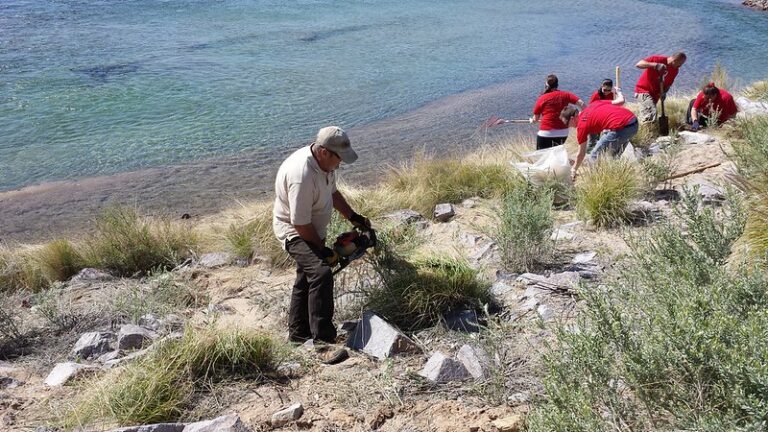
Union tends to get priority because of storage utility and revenue generation, while McIntosh faces its own access and habitat complications. At McIntosh, low water has opened shoreline areas that people were never supposed to enter, including protected habitat near the bird rookery. That has required more fencing, signage, and education.
It is a reminder that low water does not just mean less recreation. It also reshapes where people can physically go, and that can create new ecological impacts overnight.
Where the board may focus next
Near the end of the meeting, members had a thoughtful conversation about board workload and future focus. The context was this: if cash-in-lieu valuation becomes more routine through annual methodology based updates, the board may have a little more room to engage other water issues without stepping away from its main mission.
There was no appetite to weaken the board’s role in raw water policy. If anything, several members stressed that cash-in-lieu and development review are among the board’s most important functions because they directly affect how growth pays for water.
But there was interest in spending more time on related topics such as:
- Water quality discussions
- Capital improvement planning
- Long range cost projections
- Earlier review of studies that eventually shape rates and infrastructure choices
That is an encouraging signal. A board like this can add the most value when it serves as an informed public forum, not just a procedural stop.
FAQ
What was the biggest issue discussed at the June 15, 2026 Water Board meeting?
The most detailed discussion centered on Spring Gulch near Pleasant Valley, where residents raised concerns about stagnant water, odor, vegetation buildup, possible water quality issues, and the long wait for a larger city improvement project.
What is planned for Spring Gulch?
The city has a longer term capital improvement project planned, tentatively around 2028 to 2029, to redesign the channel with a narrower low flow section inside the broader corridor. The goal is to improve water movement and reduce stagnation.
Did the board identify an immediate fix for Spring Gulch?
No immediate full solution was identified. Interim options such as vegetation management, dredging, and possible follow up testing were discussed, but staff were clear that access, permitting, and disposal costs all make quick fixes difficult.
Was water quality testing at Spring Gulch confirmed?
The discussion suggested that a visual review had occurred, but not necessarily formal lab testing of the kind residents were requesting. Staff indicated they would follow up with the lab and bring more information back.
What happened with the cash-in-lieu water rights value?
The board recommended increasing the cash-in-lieu valuation by 5.7 percent to $63,000 per acre foot. The intent was to keep the value aligned with market and planning indicators through a more regular annual process.
How full was Union Reservoir at the time of the meeting?
Union Reservoir was reported at a little over 60 percent full, an improvement from the prior month. That increase helped keep boating operations viable for the summer.
Is swimming open at Union Reservoir?
The usual full swim area was not operating in the standard way, but a designated wading area remained open with swim at your own risk signage.
Why are aquatic nuisance species inspections such a big deal at Union Reservoir?
Because boats arriving from infested waters can introduce invasive species such as zebra mussels or Eurasian watermilfoil. Once established, these species can create expensive, long term damage to reservoirs and water infrastructure.
Final takeaway
The big picture is fairly clear. Longmont has some solid water planning tools and committed staff, but it is also dealing with the same pressures many Front Range communities face: heat, drought variability, aging assumptions in built systems, and the challenge of matching long range capital planning to present day lived experience.
And if there was one phrase that quietly tied the whole meeting together, it might be this: enough water is not always enough. It has to be in the right place, moving in the right way, with the right systems around it.